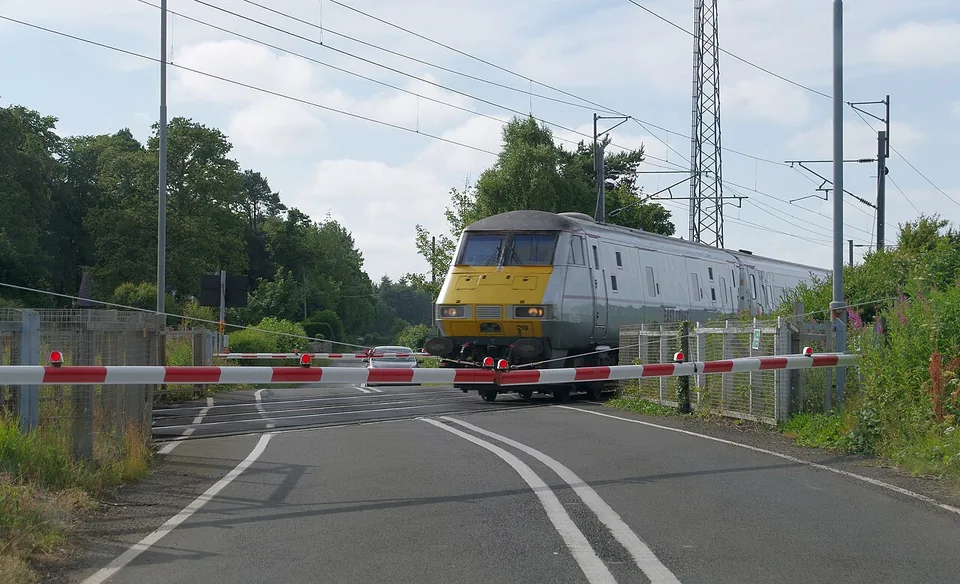
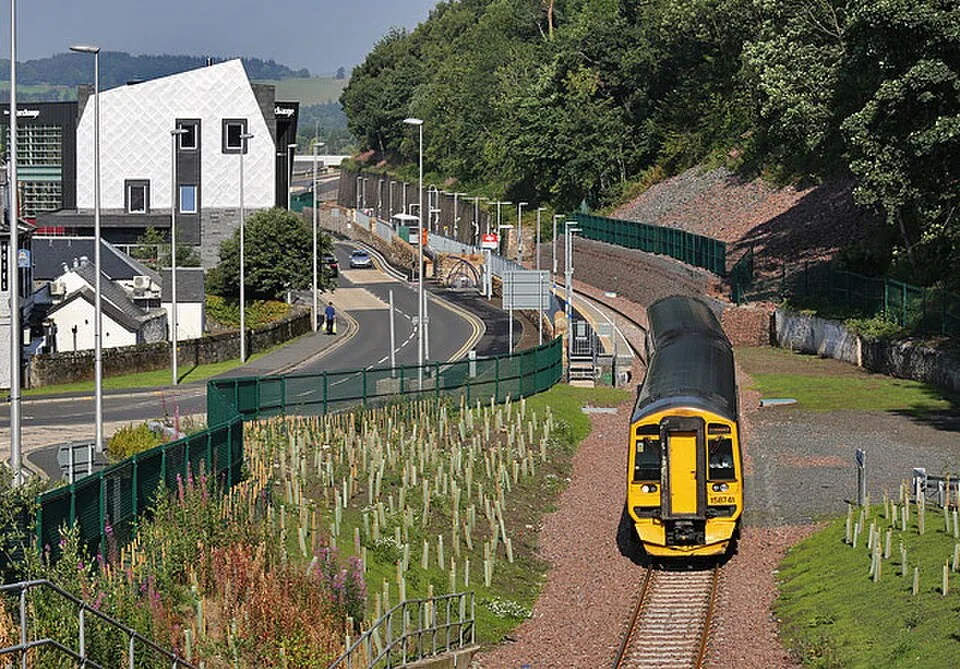
This four-day journey follows the North Sea from Newcastle towards Edinburgh, then turns inland along the Borders Railway. We use Berwick-upon-Tweed, Edinburgh and Galashiels as overnight bases, giving the coast and the Gala Water valley distinct parts of the holiday. The plan combines a main-line scenic ride with smaller towns and substantial visits, not just a change of trains in the Scottish capital.
The first two days split our Northumberland coast guide into manageable sections. Alnmouth supplies a village-and-estuary stop before Berwick. The following day continues across the border, with Dunbar as the main intermediate visit before Edinburgh. Right towards Edinburgh is the sea-facing choice on the coastal sections, while the southbound equivalent is left. The railway also runs inland, so the window advice identifies a preference for the named shore stretches, not a promise of uninterrupted water.
From Edinburgh, the Borders Railway gives a different rhythm. We watch both sides as Gala Water, villages, fields and woodland alternate. Newtongrange offers the National Mining Museum Scotland, while Galashiels brings the Great Tapestry of Scotland and useful onward transport. The last day uses Tweedbank for Abbotsford, Sir Walter Scott’s home, before returning to Edinburgh. Melrose is not a station on the reopened railway; any extension there needs a separately planned bus connection.
We leave room for the visits themselves. At Alnmouth, the station and village are separate places, so the stop needs the full guide’s walking approach or a planned local transfer. At Newtongrange and Tweedbank, station access does not settle the museum or estate access. Use each attraction’s current visitor information and check the complete route from platform to entrance before booking a supported or wheelchair-accessible trip.
The tickets are also in two parts. A Scottish pass may help with the Borders days, but it does not establish coverage of the entire Newcastle–Edinburgh coastal journey. Compare ordinary tickets and eligible Railcard reductions for the first section, then the current Central Scotland Rover or Spirit of Scotland conditions for the Scottish portion. We finish with an Edinburgh night so the final visit does not depend on catching a tight long-distance departure immediately after the train from Tweedbank.
Your bases
Counts follow each day’s listed overnight base, including the final day; adjust that last night if you travel home instead.
Best window: Right towards Edinburgh for the North Sea on the coastal sections; watch the route’s inland stretches too.
Start at Newcastle and choose a train that actually calls at Alnmouth. Main-line services do not all stop at every station in the scenic guide. Keep the right-hand window for the sea-facing stretches northwards and make Alnmouth the main intermediate stop. Check the onward train to Berwick before leaving the station, especially if the first journey begins with a separate approach to Newcastle.
Alnmouth station is not in the centre of the village. Use the full guide’s station-to-village approach and allow for that transfer in both directions. Once in the village, concentrate on the estuary and the streets around the coast. This outline does not add an Alnwick excursion: the bus connection and a castle visit would make a different, fuller stop. Stay within the time available for the chosen village outing and return to the railway for the booked or permitted onward service.
Continue to Berwick and settle into the overnight base before extending the afternoon. The town’s Elizabethan walls are the main visit, with the official town route as the starting point for the walk. Keep the station approach and any uneven historic surfaces separate from the train’s own access arrangements. The River Tweed and Royal Border Bridge belong to the town’s railway setting; Network Rail’s history explains the structure beyond the brief view from a carriage.
Stay in Berwick-upon-Tweed. This avoids turning Alnmouth and the walls into hurried gaps before an Edinburgh arrival. Check the next day’s Dunbar call before dinner, and keep larger bags at the accommodation where storage has been agreed during any walk before departure.
Best window: Right towards Edinburgh for the sea near Burnmouth and other coastal stretches; left would face the sea on the reverse journey.
Continue north from Berwick, using a service that calls at Dunbar for the planned visit. The right-hand side is the sea-facing preference towards Edinburgh, including the cliff-top section near Burnmouth. Keep an eye out as the railway leaves and rejoins the coast. The border crossing is part of a continuous main-line journey, but ticket and operator restrictions still apply to the service selected.
At Dunbar, make John Muir’s Birthplace the focused town visit. Use its official location and access information and the journey guide’s station approach. The museum connects this coastal stop with the life of the conservationist born here. It is a more manageable visit between trains than trying to add a substantial coastal hike while carrying the holiday luggage. Check the current visitor arrangements before choosing the gap in the railway itinerary.
Allow time in the town without losing the onward connection. If luggage storage has not been confirmed, do not assume that a small museum or café will hold bags for the party. Keep the train’s departure and permitted ticket in mind when deciding how long to stay. A flexible plan can still fail if the chosen service does not make the necessary call.
Continue to Edinburgh Waverley and stay in Edinburgh. Use the evening to arrange the next day’s Borders journey and the museum visits, not to add another distant railway. Waverley is the transfer point onto the Tweedbank service, so check the appropriate platform information when travelling. The holiday now changes from a coastal main line to the inland Gala Water route. Keep the overnight room’s own access and luggage arrangements distinct from those of the station.
Best window: Both sides towards Tweedbank: Gala Water crossings, villages, fields and woodland change the view along the valley.
Take the Borders Railway from Edinburgh Waverley and make Newtongrange the first stop. The National Mining Museum Scotland occupies the Lady Victoria Colliery and gives the day a clear industrial-history visit. Check its current visit and access information before fixing the train interval. Follow the guide’s station approach; arriving at an accessible platform does not by itself settle the entrance route or every part of the museum visit.
Give the museum enough time to be the main stop before continuing south. The holiday should not depend on racing through two large attractions. Use the selected timetable to decide when to leave, and keep the next useful train in the plan before walking away from the station. A later departure can be sensible when the Galashiels visit is held for the next morning, provided that fits the attraction’s current arrangements.
On the ride towards Galashiels, watch both sides for the Gala Water valley. Crossings and bends change the river-facing window, while fields and woodland alternate around the line. This is a different kind of scenery from yesterday’s coastal view: the railway’s relationship with the valley and its towns supplies the interest. Use the full Borders guide for the sequence of stops and the direction-specific explanation.
Stay in Galashiels. The Great Tapestry of Scotland is the named town visit, either after arrival if the current arrangements allow or before departure on a longer version of the trip. Check its practical information before committing to both museums in one day. The transport interchange beside the railway is useful for local bus plans, but this itinerary keeps the main overnight and railway sequence straightforward. Leave Melrose and other bus excursions for extra time, not an assumed extension of the rail line.
Where to stop off
National Mining Museum Scotland
Great Tapestry of Scotland if the selected visit arrangements allow
Best window: Both sides on the short trip to Tweedbank and the return to Edinburgh; the Gala Water view alternates at crossings.
Use the final Borders day for Tweedbank and Abbotsford. Check the estate’s own getting-here and access information before choosing the station approach. The full journey guide gives the walking route and its limitations. If that route is unsuitable for the party, arrange a confirmed alternative transfer before arriving; the fact that Abbotsford is near the terminus does not make every approach or part of the historic property step-free.
Make Sir Walter Scott’s home the main visit. Choose the house and grounds arrangements that match the current visitor offer, and leave enough time to return to the railway without hurrying. This is not also a Melrose day unless a longer itinerary has deliberately added the bus and another overnight. Tweedbank is the rail terminus; Melrose itself is beyond the reopened line and needs its own onward plan.
Luggage needs a decision before leaving Galashiels. Ask the accommodation about storage and plan how to collect it before the journey north, or make a confirmed arrangement at the next base. Do not assume that the attraction accepts holiday bags. Keep the final train from the chosen station and any local transfer in the same practical plan, including assistance if needed.
Return on ScotRail towards Edinburgh. The opposite-direction ride gives another look at the changing valley windows. Stay in Edinburgh for the final night, keeping the long-distance journey home for the next day. That separates the attraction visit from a fixed main-line departure and leaves room if the local connection changes. For a shorter holiday, replace one of the museum visits with the return journey, but do not simply compress the same list of attractions into a tighter sequence.
Compare ordinary tickets and eligible Railcard discounts for Newcastle–Alnmouth–Berwick–Dunbar–Edinburgh, checking the selected stops and operators. Our Scottish rail passes guide explains Central Scotland Rover and Spirit of Scotland for the Borders section. Those passes do not establish coverage of the whole Newcastle coastal approach. Count the Scottish travel days and compare them with ordinary returns before buying a pass. The attraction admissions and any bus or taxi outside the stated pass conditions remain separate purchases. Keep the final Edinburgh departure ticket in the whole-holiday comparison.51617
Getting there and home
Join the itinerary at Newcastle using the current main-line journey from your starting point. At Edinburgh Waverley, transfer onto the Borders Railway for the southern part of the holiday. Return there from Tweedbank or Galashiels for the final overnight stay and the next day’s long-distance journey home. Check platform, luggage and assistance arrangements for each interchange. For anyone leaving a car at Newcastle, compare the complete return to that station before booking accommodation; the scenic itinerary is linear until its Borders out-and-back section, not an automatic loop to the starting point.518
Frequently asked questions
Does a Scottish pass cover Newcastle to Edinburgh?
Do not assume it covers that whole journey. Check the exact pass boundaries and buy the uncovered English coastal section appropriately.
Is Melrose on the Borders Railway?
No. Tweedbank is the railway terminus; Melrose needs a separately planned onward transfer.
Can we finish without the last Edinburgh night?
Yes, if a shorter visit list and a checked connection make the journey home practical. This outline keeps the night to separate the final attraction from the long-distance departure.