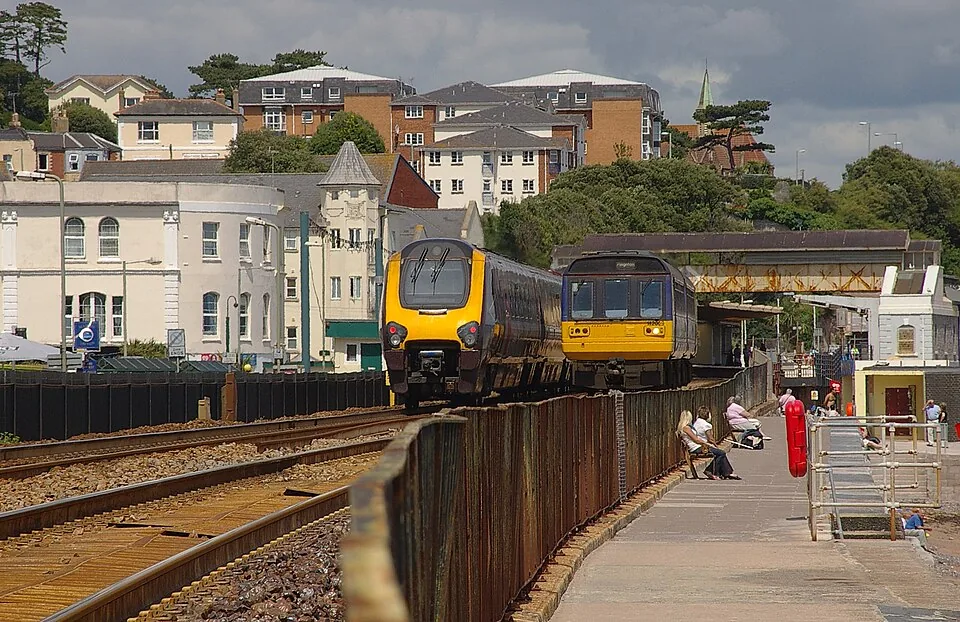
For the Dawlish sea wall, choose the left facing forwards from Exeter towards Paignton and the right on the return. The railway runs beside the open coast around Dawlish and Teignmouth between the Exe and Teign estuary landscapes. We plan this as a daytime Riviera Line outing, with a separate decision about leaving the train for a seafront stop.
The carriage gives moving views of water, the promenade and the line’s changing coastal setting. A short section of open sea can be followed by a tunnel, buildings or a turn towards an estuary, so keep the route sequence in mind instead of expecting an uninterrupted ocean panorama. A window preference helps with the open stretches, but a seat reservation and the available pane still determine what can be seen from the actual place on board.
Dawlish station is beside the town’s seafront. The rebuilt higher promenade and the station’s footbridge and lifts have improved particular parts of the visit, while the Lawn provides another town-centre pause. Teignmouth offers a different seaside stop on the same railway. Use each station’s access information and the existing stop-card directions when choosing the route beyond the platform; a description of the railway’s engineering works is not a measured walk from a station.
Watching trains from a public sea-wall path is a different activity from riding beside the water. The wider coast has exposed sections, tunnels and places where a continuous public path cannot be assumed. Weather, closures and resilience works can change the available frontage. Follow local signs and Network Rail’s live information, keep off the tracks and never use a railway tunnel as a continuation of a coastal walk. For a calmer day, choose one town stop and the actual return train before adding a longer shore outing. The view from the carriage remains a useful option when the exposed path is unsuitable.
Our choices and how to plan them
Where the views open out
The Riviera Line follows the Exe estuary, reaches the sea-wall coast around Dawlish and Teignmouth, then turns towards the Teign estuary. Left towards Paignton and right towards Exeter retain the existing sourced direction advice. The best open-water sections belong to that changing sequence, with tunnels and town buildings interrupting the view between them. Read the full route guide before choosing an intermediate stop, and keep the train’s actual calling pattern separate from the places visible through the window. An overnight sleeper is not a reliable substitute for this daytime coastal outing.12
Watching from the public paths
Network Rail describes the higher promenade and improved station access at Dawlish, including lifts and a footbridge. Those works concern named sections of frontage, not a promise of a continuous level path all the way to Teignmouth. Watch from public paths that are open on the day, observe signed closures and leave space for other promenade users. Waves and active works can make an exposed viewpoint unsuitable. A better photograph never justifies entering railway property, crossing the tracks or attempting to continue along the line through one of the tunnels.23
Dawlish or Teignmouth?
Dawlish puts the station, beach frontage and the Lawn into a compact town visit; the existing Riviera Line stop card supplies the retained measured Lawn approach. Teignmouth provides another seaside destination and its own station access information. Choose the town that fits the intended pause, then compare the actual outward and return services. The two stops can also be separate outings from one base. We avoid presenting the train journey between them as a published walking route: coastal paths have their own surfaces, gradients, closures and interruptions that need a separate plan.45
Plan a weekend
Dawlish is a practical base for a rail-and-seafront break, while Teignmouth gives another starting point on the same line. Choose accommodation after matching the station access and planned excursions.