Exeter to Paignton
Sit on the left (facing forwards) from Exeter St Davids towards Paignton for the Dawlish sea wall. The community rail guide recommends this window specifically for the open sea views.1

England · Exeter, the Exe Estuary and the South Devon coast
Exeter → Paignton
Devon’s railway at the water’s edge
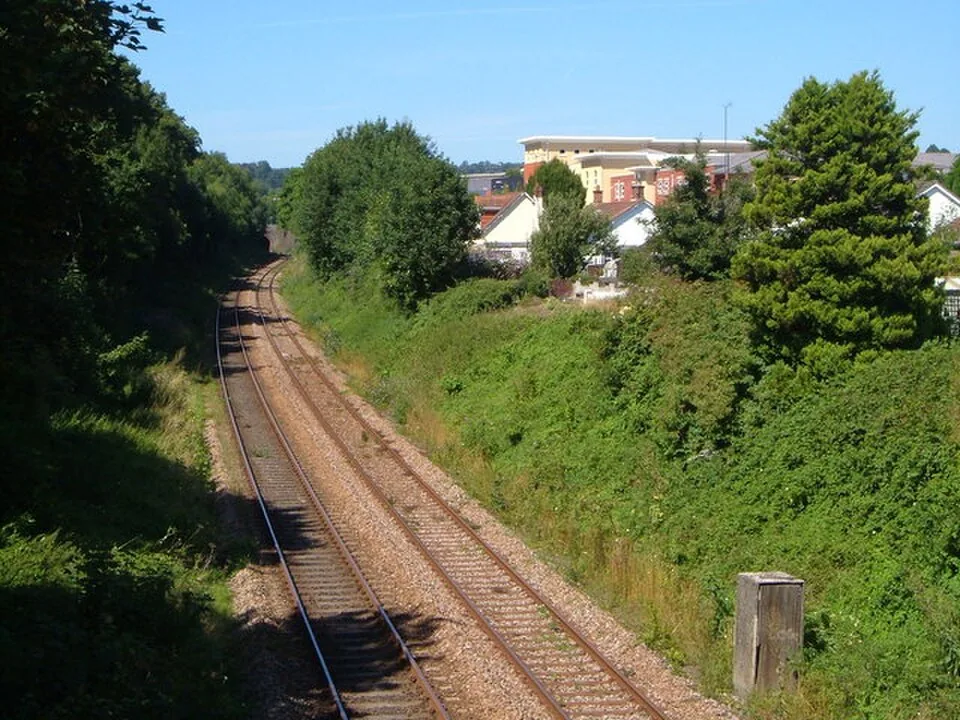
Derek Harper · CC BY-SA 2.0 · Photograph source
Some links earn us a small commission at no extra cost to you.
Before boarding
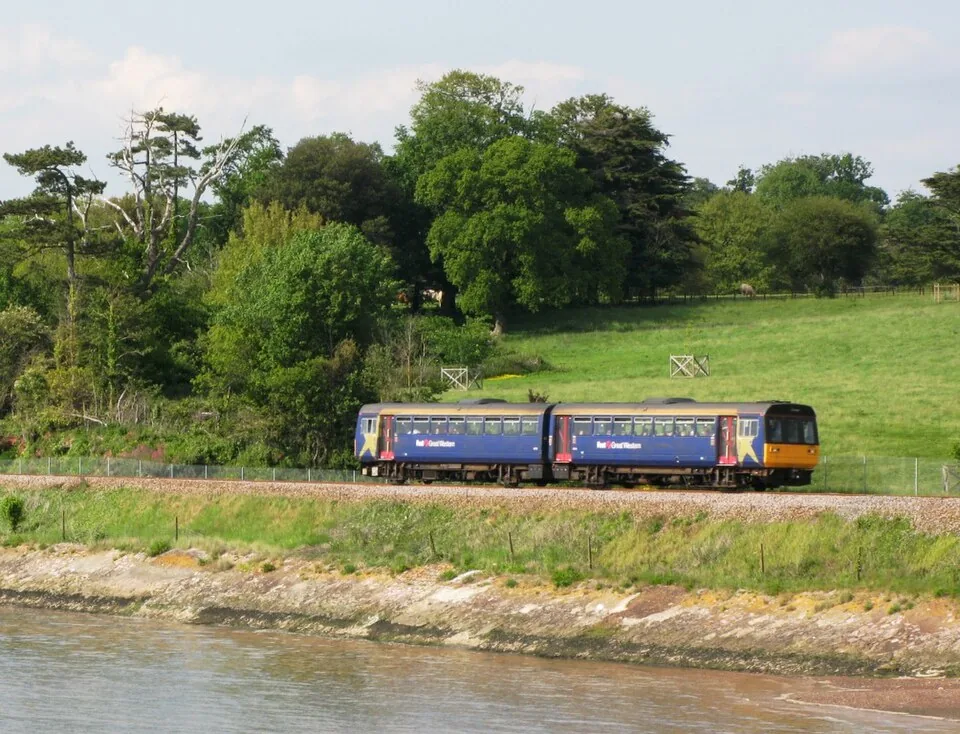
After the Exe Estuary the tracks run beside the waves through Dawlish and Teignmouth, before turning towards the English Riviera.
Pick your window
Choose the left towards Paignton or right towards Exeter for the Dawlish sea wall.3
Sit on the left (facing forwards) from Exeter St Davids towards Paignton for the Dawlish sea wall. The community rail guide recommends this window specifically for the open sea views.1
Sit on the right (facing forwards) heading towards Exeter for the sea-wall section at Dawlish.1
Why ride it
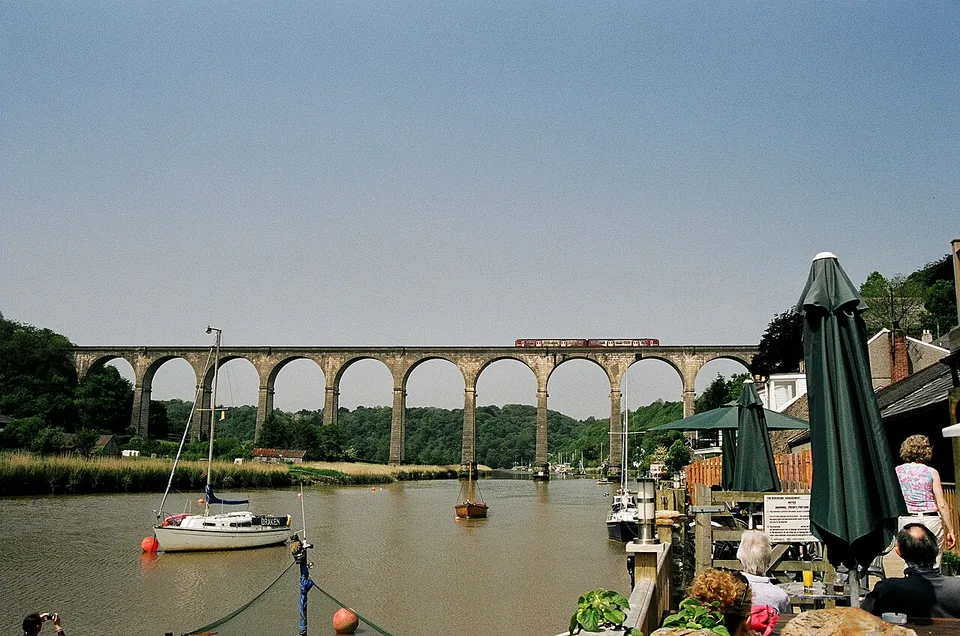
The Exe Estuary opens the journey from Exeter, with Powderham and Starcross before Dawlish Warren. At Dawlish the railway runs on the sea wall, beside the promenade and breaking waves. Cliffs and tunnels interrupt the shore towards Teignmouth, where the Teign Estuary introduces another waterside landscape. The line then turns inland to Newton Abbot before continuing into Torbay through Torquay and Paignton. The sea-wall section and the final resort arrival are separate parts of the ride.
Choose your destination by the kind of day you want. Dawlish puts the railway's seafront setting at the centre of the visit. Teignmouth offers another coastal town to explore, while Paignton gives the journey its complete endpoint. There is no obligation to ride through and immediately return. A break at the place that most interests you can make more of the line than travelling farther simply to complete the map.
For the sea wall, sit on the left (facing forwards) towards Paignton, following the community rail partnership's recommendation. The return equivalent is the right towards Exeter. Keep the camera ready before the coastal section, then give yourself time just to look. The interest is in the relationship between the moving train, shore and open water, not only in a particular landmark. Small changes in the view can be more satisfying than trying to photograph every few seconds.
The Exe Estuary deserves attention too. It gives the ride a different beginning from the open sea, so do not wait until Dawlish to start enjoying the window. Around the cliffs and tunnels towards Teignmouth, the interruptions in the view become part of the rhythm. Let the enclosed moments give way to the next open stretch. The whole coastal sequence is what makes this railway distinctive.
Our preferred first outing is a return ride with one proper seaside stop. Have a stroll, find somewhere you would like to eat and leave enough space to reach the station without hurrying. If you want a heritage train excursion from Paignton, plan that as a second experience with its own ticket and programme. The regular GWR journey is already a worthwhile trip, whether you add another railway or simply enjoy an afternoon beside the water.
From Exeter towards Paignton, favour the left for the sea-wall stretch; returning towards Exeter, choose the right. This keeps the existing Riviera Line advice and its community-rail source. The ride moves from the Exe estuary towards the open coast around Dawlish and Teignmouth before turning to the Teign estuary. Sea-wall views are one sequence within that wider journey, with tunnels and built-up sections between the open windows.
Dawlish is the stop for seeing trains against the town’s seafront setting. The station sits beside the beach, while the Lawn gives a town-centre pause away from the narrow coastal edge. Use the existing stop card for its measured station walk and access qualifications. The rebuilt higher promenade and the station’s lifts improve parts of the visit, but that does not make every coastal approach equally accessible.
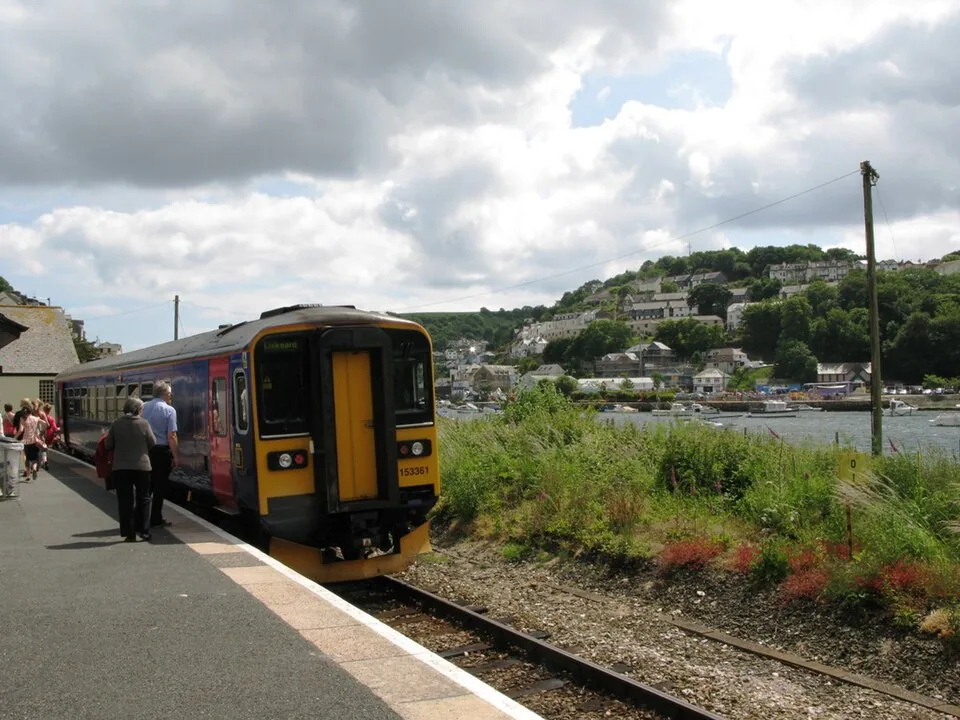
Teignmouth provides another useful railway-and-seaside stop, with a different perspective on the coast and estuary. Check its own station facilities and the intended town route separately. A train journey between Dawlish and Teignmouth is not a promise of a continuous, level public path beside all the intervening railway. Tunnels, exposed sections and local access conditions interrupt that simple picture.
Our Dawlish sea-wall guide separates the view from the carriage from watching trains from public paths. Follow signed closures and Network Rail’s current resilience-work information, especially when waves or works affect the exposed frontage. Keep clear of the railway and never follow the track through a tunnel to continue a walk. For a straightforward rail day, choose a Dawlish or Teignmouth stop around the actual return services and treat the shore visit as its own part of the outing.
Devon & Cornwall Rail Partnership: Riviera Line · Network Rail: Dawlish resilience works and access
Choose one main stop for a day out. Distances are one way from the station unless a circuit is stated; walking times are our estimates except where the attraction publishes one. Allow-time suggestions include time to look around.
Stop 1
Stop here to cross the Exe on the seasonal passenger ferry.
From the station: about 0.22 miles (around 5–10 minutes’ walk)1731
How we measureMeasured via the station footbridge, its steps and the full customer-access pier to the ferry terminal.
Request stop: No — use a service shown as calling here.28
Starcross ferry pier — The boat connects Starcross with Exmouth when the ferry is operating.
Cross the railway footbridge and descend the steps to the signed ferry approach, then follow the customer-access pier to the terminal. The measured walk is about 0.22 miles, including the full pier; check the ferry’s operating notice before committing to the crossing.
Access: Starcross station has no step-free platform access. The footbridge and pier approach involve steps, so this is not a wheelchair-accessible ferry connection.
The Atmospheric Railway Inn — A village pub on The Strand, close to the station approach.
Allow time: 1–2 hours for a short estuary visit; more for an Exmouth excursion.
Stop 2
Get off here for a sandy beach and the nature-reserve landscape behind the dunes.
From the station: about 0.25 miles (around 10 minutes’ walk)1631
How we measureRequest stop: No — use a service shown as calling here.24
Dawlish Warren beach — A beach beside the Exe estuary, with the reserve beyond the resort frontage.
Follow Station Road to Beach Road and pass under the railway towards Beach Walk and the seafront; allow about 0.25 miles. Continue to the reserve only on the paths shown in its visitor information.
Access: Dawlish Warren station has some step-free access to all platforms. The road approach is paved, while the dunes and soft sand are uneven; follow the reserve’s visitor information for its paths.
The Boathouse Bar & Grill — A named food stop beside the beach approach on Beach Way.
Allow time: 1–2 hours for the beach and an initial reserve walk.
Stop 3
The Lawn and black swans make Dawlish a compact stop between sea-wall views.
From the station: about 0.1 miles (around 5 minutes’ walk)631
How we measureRequest stop: No — use a service shown as calling here.25
The Lawn — The town’s central green follows Dawlish Water, where the black swans are a familiar sight.
Leave the station forecourt, cross towards Piermont Place and take the town-side path to The Lawn; this is about 0.1 miles. The green is more sheltered than the exposed sea wall in rough weather.
Access: Dawlish has step-free access to all platforms using lifts. The town-side approach is paved and largely level; beach access and the sea-wall route have their own steps and exposed sections.
Gay’s Creamery — The South Devon visitor itinerary recommends its takeaway pasties and ice creams near The Lawn.
Allow time: 45–90 minutes for the stream, green and seafront.
Some links earn us a small commission at no extra cost to you.
Stop 4
Choose Teignmouth for the promenade, Grand Pier and a longer shore-side lunch.
From the station: about 0.35 miles (around 10 minutes’ walk)731
How we measureRequest stop: No — use a service shown as calling here.29
Teignmouth Grand Pier — The Victorian pier is on the town’s main seafront.
From the station approach follow Higher Brook Street and Hollands Road towards Triangle Place, then continue past Den Crescent to the promenade and pier. The mapped approach is about 0.35 miles and descends towards the sea.
Access: National Rail lists some step-free access to all Teignmouth platforms. Use the appropriate street entrance; the downhill pavement route has road crossings and the return is uphill.
The Jolie Brise — A pub on Station Road, convenient before the walk to the promenade.
Allow time: 1–2 hours for the pier and town.
Some links earn us a small commission at no extra cost to you.
Stop 5
Torre Abbey gives this seaside stop a clear museum-and-gardens focus.
From the station: about 0.35 miles (around 10–15 minutes’ walk)3331
How we measureThis measured street approach uses Rathmore Road, Falkland Road and Chestnut Avenue. Torre Abbey also publishes a shorter five-minute station approach; consult its visitor map for that route.
Request stop: No — use a service shown as calling here.30
Torre Abbey — The historic abbey houses collections and exhibitions, with gardens outside.
Leave the station towards Rathmore Road, continue along Falkland Road and turn towards Chestnut Avenue for Torre Abbey. Our mapped approach is about 0.35 miles with a gentle rise away from the seafront.
Access: Torquay has step-free platform access via its separate entrances. Torre Abbey offers lifts and step lifts, although its access guide records limits for some motorised wheelchairs and parts of the gardens.
Torre Abbey Café — A café for drinks and light food on the abbey visit.
Allow time: 2–3 hours for the abbey and gardens.
Some links earn us a small commission at no extra cost to you.
Stop 6
The end of the line puts us within a short walk of the beach and Torbay’s resort frontage.
From the station: about 0.35 miles (around 10 minutes’ walk)831
How we measureRequest stop: No — use a service shown as calling here.27
Paignton seafront — The beach, green and pier provide an easy focus after the rail journey.
From the station exit follow Torbay Road towards the sea, cross Esplanade Road and join the promenade. The measured route from the public exit is about 0.35 miles, without a sustained hill.
Access: Paignton offers step-free access to all platforms via its street approaches. The promenade is paved; reaching the sand introduces a different surface.
Grand Central — A café bar on Torbay Road, along the route between the station and sea.
Allow time: 1–2 hours for the front, with longer if staying in Torbay.
Some links earn us a small commission at no extra cost to you.
Community photographs
A concise visual edit for a short journey; four more photographs are available below.


Eight route photographs link to their original Wikimedia Commons pages for the creator, licence and reuse terms.
Start at Exeter St David’s, where the Riviera Line meets the main-line network. Arrive from London Paddington or Bristol by GWR, or from Birmingham and northern cities on CrossCountry; select a service connecting towards Paignton. Exeter Central is also served by local Riviera Line trains.22220
Stagecoach route 2 connects Exeter, Exminster, Dawlish, Teignmouth and Newton Abbot. Its stops can help with a town-to-town return, especially if a coastal walk ends away from the railway.32
Use the published parking details for Exeter St David’s if the car will stay at the start. National Rail also lists station parking at Dawlish, Teignmouth and Paignton, giving other starting points along the route.26252927
From Paignton take the Riviera Line back towards Exeter, changing at Exeter St David’s for the main-line journey home. Through services exist, but use the calling pattern on the selected train if returning after a Teignmouth or Dawlish stop.2
Travel Exeter–Paignton for the full Riviera ride, or stop at Dawlish or Teignmouth for the sea wall and waterfront. Newton Abbot separates the coastal section from the onward Torbay journey. A Dartmouth Steam Railway excursion from Paignton uses another operator, station and ticket. Allow transfer time at Exeter when returning to a booked main-line service, and use the current local timetable for any coastal stop-off.5
The community rail partnership's assisted-travel guide links to GWR support. Discuss the boarding station, destination, platform access and toilet requirements for your actual service. The railway and the coastal walk are separate parts of the day: choose a promenade or town route that suits your needs instead of assuming that station access describes every path nearby.5
Use the dated operating calendar for the Riviera Line, including any event-specific timetable and ticket conditions. For Riviera Line, we would put Exe Estuary into useful daylight, allowing a longer destination pause when the season provides enough light. At Paignton, settle the homeward Riviera Line service before beginning the planned walk. Any attraction added to the Riviera Line outing has separate opening arrangements; use Great Western Railway for the railway’s actual operating dates.5
An Off-Peak Day Return is one of the ticket types described by the community rail partnership for Riviera outings. Compare it with the Single or Return options for your starting station and selected trains. The Devon Day Ranger is the named multi-journey option for a broader Devon rail day, covering the Torbay resorts within its published area and subject to its validity rules.
National Rail lists Railcard eligibility for the Devon Day Ranger, including Senior, Disabled Persons, Family & Friends and Two Together cards. Use the conditions for your own card when choosing the travel plan. GWR offers Advance tickets on selected journeys, but do not assume that buying a local coastal fare before the day makes it an Advance ticket. If you arrive on a fixed-service long-distance fare, keep those conditions separate from the ticket used for your Riviera outing.2910
For the Dawlish sea wall, prepare at the recommended left-hand window towards Paignton before the view opens. Take a few frames that include the shore and water together, then lower the camera and enjoy being there. The cliff-and-tunnel sequence towards Teignmouth creates short interruptions, so be ready for the return to daylight. A clear window matters more than chasing a supposed best carriage.
For sun direction, assess the light on your date and departure. Bright water can make the first attempt less useful than the return. Leave flash off, bring the lens close to the glass and shield it from interior reflections. If photography is the main reason for the trip, complement the moving-window pictures with a stop at Dawlish, where you can take your time over a separate view of the railway setting.26
Bring your own drink and something to eat if you want refreshments during the coastal ride. GWR's catering guidance limits food and drink sales to qualifying longer-distance Intercity Express services; a regional Riviera trip should not be planned around a trolley. With such a rewarding window section, keep the picnic simple and save a leisurely meal for the seaside stop.
GWR states that its trains have onboard toilets. Its luggage and cycle policies cover how to carry bags and bicycles, including service-specific reservation arrangements. Use the storage areas, leaving doors, aisles and wheelchair spaces clear. If taking a bicycle, settle its travel arrangements alongside the ticket. Keep a small day bag accessible so that the things you need do not require moving larger luggage during the sea-wall stretch.11121314
The community rail partnership gives about an hour to an hour and a quarter for Exeter–Paignton. That is the train ride, with time at Dawlish, Teignmouth or Paignton added separately. A seaside return outing can therefore be quite different from simply travelling through. Choose the stop you actually want before deciding the shape of the day.2
Sit on the left (facing forwards) from Exeter St Davids towards Paignton for the Dawlish sea wall. The community rail guide recommends this window specifically for the open sea views.1
Yes. Our suggested first outing is a return with one main coastal stop: Dawlish for the railway's seafront setting, Teignmouth for a town break, or Paignton for the complete line. Keep a longer walk or heritage excursion optional. The ride and a relaxed seaside visit are enough to make a satisfying day.678
GWR offers assisted travel, and the community rail partnership provides links to arrange it. Discuss the stations and platforms you will use, together with boarding and toilet needs. A walk beside the coast needs its own access planning. Keeping the scenic ride as the main event allows you to choose a destination break that works for you.1512
Start at Exeter St David’s, where the Riviera Line meets the main-line network. Arrive from London Paddington or Bristol by GWR, or from Birmingham and northern cities on CrossCountry; select a service connecting towards Paignton. Exeter Central is also served by local Riviera Line trains.22220
Read the route
Chosen for this line, its train type or the wider pleasure of slow rail travel.
by Tom Chesshyre
A contemporary, slow-travel circuit of Britain for readers who enjoy the journey as much as the destination.
View physical book (opens in a new tab)by Sherin Aminossehe
An illustrated history told through fourteen journeys—a useful companion for the wider collection.
View physical book (opens in a new tab)Further reading
Official planning
Book with the railway, or use National Rail to put your journey together.
Some links earn us a small commission at no extra cost to you.
Find places to stay in Paignton on Booking.com (opens in a new tab) Open Find a Station | National Rail (opens in a new tab) Book your tickets (opens in a new tab)Continue exploring