A separately ticketed heritage railway running seven miles from Ravenglass to Dalegarth for Boot. Steam and diesel trains cross coastal lowland, woodland and the Eskdale countryside, ending beneath the mountains of the western Lake District.
Use the operator’s timetable to choose your outward and return services.1
Reservations
A reservation rarely guarantees a particular side or that the seat aligns with a window.
Typical train
See the operator’s train information for onboard facilities.
Pick your window
Which side to sit on the Ravenglass & Eskdale Railway
Watch both sides as the tidal Mite-side country gives way to woods and the Eskdale valley on the climb to Dalegarth.4
Both sides
Ravenglass to Dalegarth for Boot
Facing forwards: favour both sides.
The Mite-side landscape near Ravenglass is followed by woods and the Eskdale valley on the winding inland climb. The early tidal country and later valley outlook occupy different sides; watch both sides for the full seven-mile sequence.10
Both sides
Dalegarth for Boot to Ravenglass
Facing forwards: favour both sides.
Watch both sides towards Ravenglass as the Eskdale valley and woods give way to the Mite-side tidal landscape nearer the coast. Bends and changing valley sides keep the view varied.10
Why ride it
The view from the train
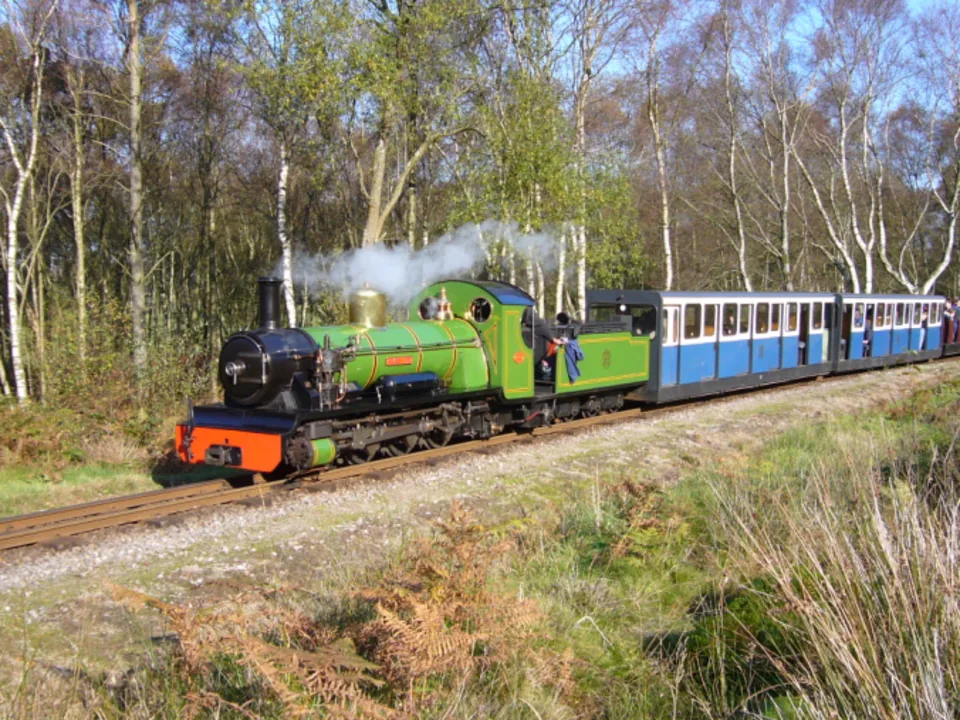
The Ravenglass & Eskdale Railway runs seven miles from the coastal village of Ravenglass to Dalegarth for Boot. Its 15-inch gauge and small carriages give a close view of woodland, fields and the valley floor. The National Rail connection is at Ravenglass on the Cumbrian Coast Line; the narrow-gauge train is a separately operated heritage service. Dalegarth is the upper terminus, with Boot a short walk beyond the station.
The railway opened commercially in 1875 to carry iron ore from the mines near Boot towards the coastal railway and the furnaces at Barrow. Passenger travel followed in 1876. The original three-foot gauge was replaced by the present 15-inch gauge during 1915–17. Granite traffic later formed another part of its working history. Preservation in 1960 secured the line as a visitor railway, but the route still follows the corridor created for valley industries.
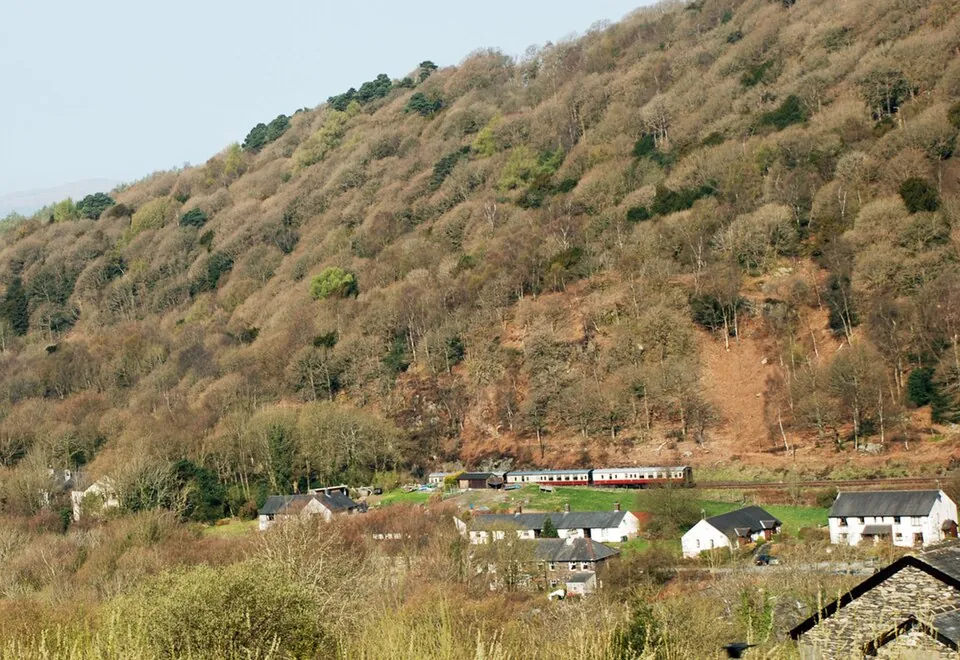
The landscape changes after leaving the tidal coast. The railway passes inland through the Mite and Eskdale country, with woods and surrounding fells on both sides. Dalegarth provides a starting point for Boot and valley walks. Wast Water and high summits are separate excursions, not places reached by simply stepping off at the terminus. The train ride itself is a low-level journey; longer fell routes require their own navigation, weather assessment and time allowance.
Ravenglass estuaryMiterdaleEskdale fells
Best stops on the Ravenglass & Eskdale Railway
Choose one main stop for a day out. Distances are one way from the station unless a circuit is stated; walking times are our estimates except where the attraction publishes one. Allow-time suggestions include time to look around.
For the museum, follow station signs within the railway site. For the bath house, use the signed footpath from the village car park and then the private road described by English Heritage: the published walk is half a mile south-east of the main-line station.
Access: The railway has level access to the booking office, café and principal facilities, with a ramped walkway from the Northern platforms. The separate bath-house route includes a footpath and private road, so check English Heritage’s access information before assuming the whole excursion is step-free.
Food and drink
1876 Ravenglass Station Café — The railway’s café at Ravenglass offers eat-in and takeaway refreshments beside the start of the line.
Allow time: Allow 1–2 hours for the museum and bath-house walk, with time to return to the booking office before boarding.
The mill publishes a ten-minute walk from Dalegarth; the measured distance runs to its entrance area.
Check the next train back before leaving the station
Request stop: No — use a service shown as calling here.2
What is nearby
Eskdale Mill — The watermill lies beyond Boot’s stone bridge, with historic machinery and a garden beside the beck.
From the platform
Leave Dalegarth on the sloping station access, turn along the valley road and follow signs into Boot. Continue through the village and over Mill Bridge to the mill, about 0.4 miles. The final approach rises beside the beck.
Access: Dalegarth has ramped platform and café access. The mill warns of granite bedrock and steep steps inside and outside; its ground-floor exhibition offers a virtual tour. A level railway café visit is a different proposition from exploring every mill room.
Food and drink
1876 Dalegarth Station Café — The café is in the lower part of the station building, with level access from the car park and a sloping ramp to the platform.
Allow time: Allow 2–3 hours for Boot, the mill and refreshments; leave the fell walks for a longer stay with a clear return plan.
Eight route photographs link to their original Wikimedia Commons pages for the creator, licence and reuse terms.
How to get to the Ravenglass & Eskdale Railway
By train
Use the Cumbrian Coast Line to Ravenglass, then transfer to the narrow-gauge railway beside the main-line station. From Carlisle approach through Whitehaven; from Lancaster, Preston or the West Coast Main Line approach via Barrow-in-Furness as the dated journey requires. The railway asks visitors to check both the Northern and heritage timetables, because a main-line arrival does not itself allocate a heritage seat.163
By bus
The railway’s current travel page identifies Stagecoach X7/7 bus links serving Ravenglass from the Whitehaven and Barrow directions. Use the operator’s dated service information for the stop and onward connection; this coastal bus is an alternative approach to Ravenglass, not a replacement for the railway up to Dalegarth.1617
By car
The operator publishes car parks at Ravenglass and Dalegarth. For the full journey from the coast, use the signed Ravenglass approach from the A595 and the station car park; the railway’s directions give approaches from the M6 via the western Lake District. Dalegarth parking suits a visit that starts and ends at Boot.16
Returning from the far end
Dalegarth is the far-end terminus, so a rail return comes back down the same line to Ravenglass. Choose the return heritage train before setting off for Boot, then leave a separate margin for the Northern connection. We recommend an Eskdale or Ravenglass overnight when a mill visit and a substantial walk are both part of the plan.216
Day trip or overnight
Connect from the Cumbrian Coast Line at Ravenglass and book a return heritage service with enough time at Dalegarth for Boot. Walks range from short valley outings to demanding fell routes, so match the plan to weather, daylight and mobility. Staying near Ravenglass or Eskdale turns the railway into a relaxed overnight itinerary.1
Accessibility
The operator provides wheelchair-accessible carriage space but asks visitors to reserve it because capacity is limited. Accessible parking and facilities are available at the principal termini, and carers may qualify for free travel under the operator’s conditions. Request stops and paths away from the termini may be unsuitable, so confirm the exact boarding and alighting plan in advance.3
When to go
Ravenglass & Eskdale Railway runs seasonally or on selected dates in its own operating calendar. This is a heritage attraction operating to its own dated calendar, not a normal scheduled National Rail service. Summer gives the most daylight for walking, while spring and autumn can be atmospheric. Open carriages are weather-dependent, and all visits should be checked against the official timetable.1
Book through the railway's official timetable and ticket pages. Advance bookings specify outward and return departures and carriage type; open, partly open and enclosed options are different experiences in wet weather. Intermediate request-stop travel has separate arrangements and depends on capacity. The operator also describes through-ticket arrangements from Northern, but boarding a particular heritage departure is subject to availability. Reserve accessible carriage space directly when needed. The heritage booking and the National Rail connection should both leave time for transfer at Ravenglass. Do not assume a late main-line arrival moves the heritage departure.9
Photography
Both sides offer valley views: the Mite-side landscape near Ravenglass gives way to woods and the Eskdale fells inland. An open carriage removes some glass reflections, but rain and wind can make an enclosed carriage more comfortable. Keep cameras and straps inside the vehicle and obey the crew's instructions. At Dalegarth, station details and the surrounding hills can be photographed without rushing. The mill's wheels and machinery provide a separate subject during a booked or advertised visit in Boot.510
On board
Steam and diesel locomotives work the railway's own operating programme. The small carriages are not full-size National Rail coaches, so choose the booked carriage type with clothing and luggage in mind. Cafés at the termini provide food stops; leave enough time to eat before the return boarding call. Bicycle spaces need advance arrangements, and accessible spaces take priority where required. For a short visit, the museum at Ravenglass and facilities at Dalegarth provide substantial stops without undertaking a fell walk.59
Frequently asked questions
How long is the Ravenglass & Eskdale Railway?
The seven-mile ride takes roughly forty minutes each way. Allow additional time at Dalegarth and for the connection at Ravenglass; use the heritage operator's dated timetable to choose both departures.521
Which side is best on the Ravenglass & Eskdale Railway?
The Mite-side landscape near Ravenglass is followed by woods and the Eskdale valley on the winding inland climb. The early tidal country and later valley outlook occupy different sides; watch both sides for the full seven-mile sequence.101
Is the Ravenglass & Eskdale Railway suitable for a day trip?
Yes. A return ride can include the Ravenglass museum and a short walk from Dalegarth to Boot or Eskdale Mill. Longer fell walks need more time than a brief turnaround between booked trains.67
Is the Ravenglass & Eskdale Railway accessible?
The operator offers accessible carriage space by prior reservation. Principal termini have accessible facilities, including a Changing Places toilet at Ravenglass. Intermediate stops and walking paths need individual checks.3
How do I get to the start of the Ravenglass & Eskdale Railway?
Use the Cumbrian Coast Line to Ravenglass, then transfer to the narrow-gauge railway beside the main-line station. From Carlisle approach through Whitehaven; from Lancaster, Preston or the West Coast Main Line approach via Barrow-in-Furness as the dated journey requires. The railway asks visitors to check both the Northern and heritage timetables, because a main-line arrival does not itself allocate a heritage seat.163
Further reading
Read the route
Chosen for this line, its train type or the wider pleasure of slow rail travel.
Hardback
Britain’s Steam Locomotives
by Julian Holland
A visual guide to 100 locomotives, best paired with the heritage railway pages.