Use the operator’s timetable to choose your outward and return services.2
Reservations
A reservation rarely guarantees a particular side or that the seat aligns with a window.
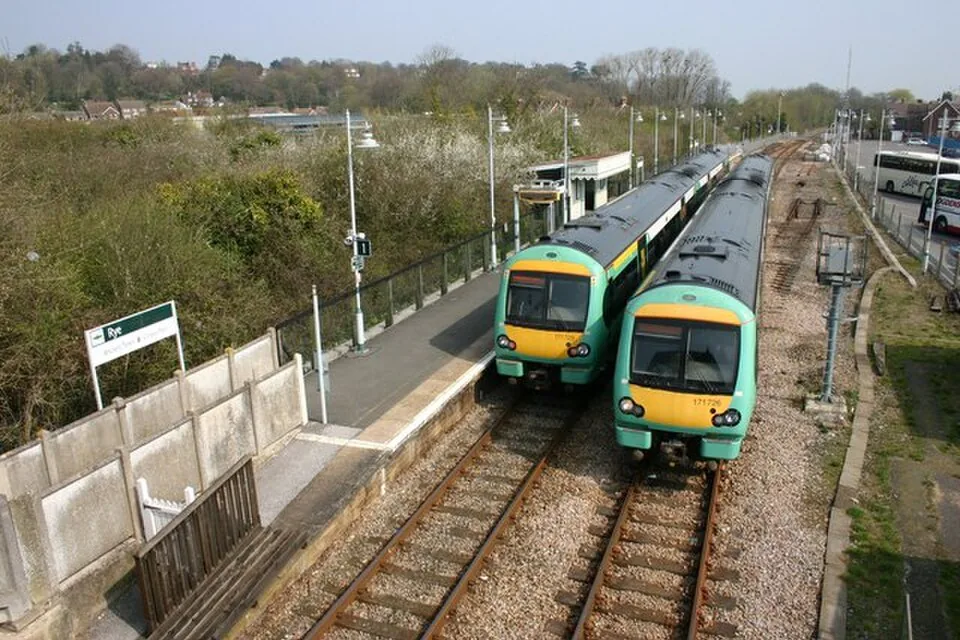
Typical train
See the operator’s train information for onboard facilities.
Pick your window
Which side to sit on the Marshlink Line
The southern marsh around Rye and Winchelsea lies to the left heading towards Hastings.1
left side
Ashford International to Hastings
Facing forwards: favour the left window.
The southern marsh around Rye and Winchelsea lies to the left heading towards Hastings. This is a marshland preference, not a claim of a continuous sea view: the line runs inland and later enters wooded country before Hastings.10
right side
Hastings to Ashford International
Facing forwards: favour the right window.
Sit on the right (facing forwards) for the southern marsh around Winchelsea and Rye towards Ashford; the rest of the line is largely inland.10
Why ride it
The view from the train
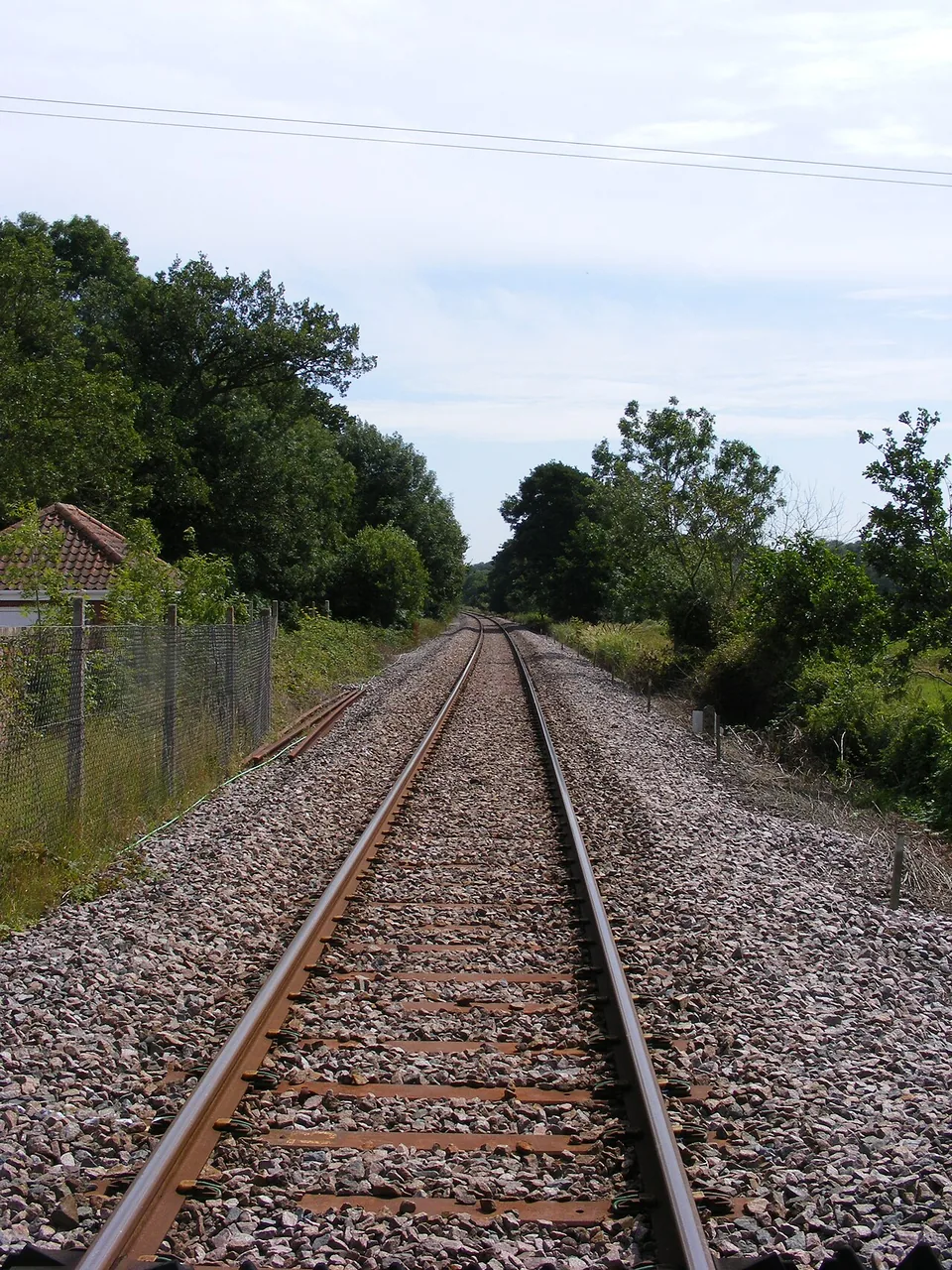
Ashford International–Hastings crosses Romney Marsh and the country around Rye before entering the wooded approach to the Sussex coast. Ham Street and Appledore precede Rye; Winchelsea, Doleham and Three Oaks come before Ore and Hastings. The route's name describes its broad marshland setting. Much of the railway lies inland, so this is not a continuous sea-wall ride. The open fields and drainage landscape are followed by towns, woodland and the final coastal destination.
Rye is the central town stop, with its historic streets close to the station. From the train, the marsh opens around the town; on foot, cobbles and compact streets reveal its older trading-port character. Rye Harbour Nature Reserve is a separate destination towards the coast, not the station forecourt. Winchelsea station similarly serves a town on higher ground, with a walk between the platform and the historic streets.
The broader community rail guide continues beyond Hastings towards Eastbourne, but that extension is outside this Ashford–Hastings route. Hastings supplies the seaside finish: the station is in the town, and the fishing beach and Old Town lie farther east. A journey focused on scenery can combine the open marsh near Rye with time at the Stade. Do not expect the train itself to pass every seafront attraction described in the wider partnership guide.
Romney MarshRyeHastings coast
Best stops on the Marshlink Line
Choose one main stop for a day out. Distances are one way from the station unless a circuit is stated; walking times are our estimates except where the attraction publishes one. Allow-time suggestions include time to look around.
Check the next train back before leaving the station
Request stop: No — use a service shown as calling here.21
What is nearby
Hamstreet Woods station circuit — The woodland loop passes oak, birch and coppice, with views over the surrounding marsh country.
From the platform
Follow Explore Kent’s station-starting route through Hamstreet Woods and back to the railway. The published loop is two miles, using woodland paths that can be muddy. Natural England also describes the reserve as less than half a kilometre from the station; that approach figure is separate from the full circuit.
Access: Ham Street station has category A step-free platform access. The full woodland circuit has gradients and uneven countryside paths. For a shorter outing, use the reserve’s separately described stile-free trail and check its surface and gradient information before setting out.
Food and drink
The Dukes Head — The village pub on The Street serves freshly prepared food and local ales.
Allow time: Allow 1½–2 hours for the woodland circuit and a village drink, with more for lunch.
Check the next train back before leaving the station
Request stop: No — use a service shown as calling here.23
What is nearby
Lamb House — The National Trust house and garden have literary links to Henry James and E. F. Benson.
From the platform
Leave Station Approach for Market Road, turn right into High Street and left into West Street for Lamb House. The measured approach is about 0.33 miles and climbs into the old town. Return downhill by the same streets; the cobbles and slopes make this more demanding than the distance alone suggests.
Access: Rye station is category B2 with conditional step-free access. Lamb House has steps and uneven terrain, and the surrounding historic streets are cobbled; check the National Trust’s access information for the house and garden before assuming that a short walk is level.
Food and drink
The Mermaid Inn — The inn in the medieval citadel has a restaurant and the Giant’s Fireplace Bar.
Allow time: Allow 2–3 hours for Lamb House, the old town and a meal; an overnight leaves time for the coast on another day.
Winchelsea Corporation gives one mile to the centre. National Trust guidance gives a shorter fifteen-minute allowance; we use the published mile and a more generous uphill walking estimate.
Check the next train back before leaving the station
Request stop: No — use a service shown as calling here.24
What is nearby
Winchelsea town centre — The station sits below the town; the centre and St Thomas’s Church area require a climb from the marsh.
From the platform
Follow the station’s signed town approach from Winchelsea Lane towards the hilltop settlement, using the visitor map for the route through the historic gateways and into the centre. Winchelsea Corporation publishes a one-mile station link. The ascent is part of the visit, with a downhill walk back to the railway.
Access: Winchelsea station is category B2, with some step-free platform access. The town is above the station and the approach is not a level village stroll; use the National Trust’s walking maps and the town access information before planning a wheelchair route over the hill.
Food and drink
The New Inn — The family-run pub is on German Street in the centre, near the church.
Allow time: Allow 2–3 hours for both station walks, the town centre and lunch.
The gallery publishes approximately fifteen minutes from the station. The measured route is to its mapped site on Rock-a-Nore Road.
Check the next train back before leaving the station
Request stop: No — use a service shown as calling here.22
What is nearby
Hastings Contemporary — The art gallery stands on Rock-a-Nore beside the historic fishing beach.
From the platform
Walk down from the station towards the seafront, then turn east for Hastings Old Town and Rock-a-Nore Road. The measured gallery approach is about 0.88 miles. The station end involves a slope, but the seafront section avoids the steep climbs to the castle and East Hill, which are separate outings.
Access: Hastings station is category A with lifts and step-free platform access. The gallery publishes a visual story and access information for its entrances and internal spaces; use those arrangements for the building rather than assuming the fishing beach and every Old Town lane are accessible.
Eight route photographs link to their original Wikimedia Commons pages for the creator, licence and reuse terms.
How to get to the Marshlink Line
By train
Reach Ashford International and change for Southern’s Marshlink service towards Rye and Hastings. Ashford is the main-line interchange at the eastern end, with Southeastern connections from London and Kent.520
By bus
Winchelsea’s town travel page links to Stagecoach services for the Rye and Hastings corridor. A town bus can be useful because Winchelsea station is below the hill and outside the town centre.28
By car
Consult the station parking information before leaving a car at Ashford International, Rye or Hastings. For a linear day, arrange the rail return to the station where the car is parked.202322
Returning from the far end
From Hastings, return along the Marshlink Line to Rye and Ashford International, or use its main-line connections for an onward journey. Check the return service before leaving Winchelsea station, where the town visit includes a walk up and back down the hill.52228
Day trip or overnight
Rye is the strongest stop for a day itinerary, with its historic centre reachable from the station, before continuing to Hastings for the seafront and old town. Check the current Southern timetable before planning two stop-offs. An overnight in Rye or Hastings removes pressure from the return journey.2
Accessibility
Station access and staffing vary significantly along this rural line. Consult Southern or National Rail station information for Ashford, Rye, Hastings and any smaller stop, and book assistance when helpful. Routes from stations into old streets, marsh paths or the seafront may introduce gradients and uneven surfaces beyond railway property.20
When to go
The open marsh is attractive year-round, but spring and summer give the best daylight for Rye and Hastings together. Autumn brings birdlife and dramatic skies; exposed weather, flooding risk and engineering work should be checked during winter.2
Tickets
Use Southern's journey planner and current timetable for Ashford–Hastings. The international services at Ashford are separate from the local railway itinerary; a Marshlink ticket does not include an international train. Check the selected fare's stop-off conditions before adding Rye or Winchelsea. Smaller stations can have different calling patterns, so match the exact return departure to the chosen boarding point. Museum admissions, reserve visits and the Hastings cliff lift are separate from the train ticket. Buy only after the outward and return journeys are identifiable in the timetable.3
The marsh gives low horizons, drainage channels and wide skies. The left towards Hastings covers the southern marsh around Rye and Winchelsea; woodland later reduces long-distance views. Keep the horizon level in a moving photograph and use the town stop for details that pass too quickly from the train. Rye's cobbles, Winchelsea's planned streets and Hastings' net huts are three different subjects. Photograph fishing activity from public areas without obstructing the crews working on the beach.510
On board
Carry food and water for the rural section and use Rye or Hastings for a café stop. The line serves small communities as well as visitors, so keep doors and aisles clear when approaching intermediate stations. Before leaving at Winchelsea, Doleham or Three Oaks, confirm that the return train calls there. Southern's timetable covers the scheduled railway; the community rail guide supplies destinations. Rye Harbour reserve has its own path and facility notices, including possible temporary closures, which should be checked separately.5
Frequently asked questions
How long is the Marshlink Line?
The Ashford–Hastings ride takes about an hour on a typical stopping service. Use the current Southern timetable for the exact departure and calling pattern, particularly when returning from a smaller station.5
Which side is best on the Marshlink Line?
The southern marsh around Rye and Winchelsea lies to the left heading towards Hastings. This is a marshland preference, not a claim of a continuous sea view: the line runs inland and later enters wooded country before Hastings.10
Is the Marshlink Line suitable for a day trip?
Yes. Rye provides a town stop near the railway and Hastings supplies the seafront finish. Rye Harbour reserve requires an additional connection or longer walk; it is not beside Rye station.689
Is the Marshlink Line accessible?
Check Southern's access information for each station and book assistance where helpful. Rye's historic streets, Winchelsea's hill and beach or reserve paths need separate assessment beyond platform access.4
How do I get to the start of the Marshlink Line?
Reach Ashford International and change for Southern’s Marshlink service towards Rye and Hastings. Ashford is the main-line interchange at the eastern end, with Southeastern connections from London and Kent.520
Further reading
Read the route
Chosen for this line, its train type or the wider pleasure of slow rail travel.
Physical edition
Slow Trains Around Britain
by Tom Chesshyre
A contemporary, slow-travel circuit of Britain for readers who enjoy the journey as much as the destination.