Use the operator’s current timetable for the individual calling pattern2
Reservations
Check the chosen operator’s reservation arrangements before booking
Typical train
See the operator’s train information for onboard facilities.
Pick your window
Which side to sit on the Edinburgh–Aberdeen
Choose the right towards Aberdeen for the Fife shore and North Sea; Montrose Basin is an important left-hand exception.3
right side
Edinburgh Waverley to Aberdeen
Facing forwards: favour the right window.
The water lies south of the railway on the coastal approach to Kirkcaldy and east of the railway on the Angus and Aberdeenshire coast. Choose the right for these stretches. Montrose Basin lies inland, on the left when approaching Montrose from Arbroath. Both windows have open-water views on the Forth and Tay bridges.1
left side
Aberdeen to Edinburgh Waverley
Facing forwards: favour the left window.
The left faces the North Sea south of Stonehaven and Arbroath and the coastal Fife shore. Look right across Montrose Basin after leaving Montrose southwards. The Tay and Forth crossings have views on both sides.1
Why ride it
The view from the train
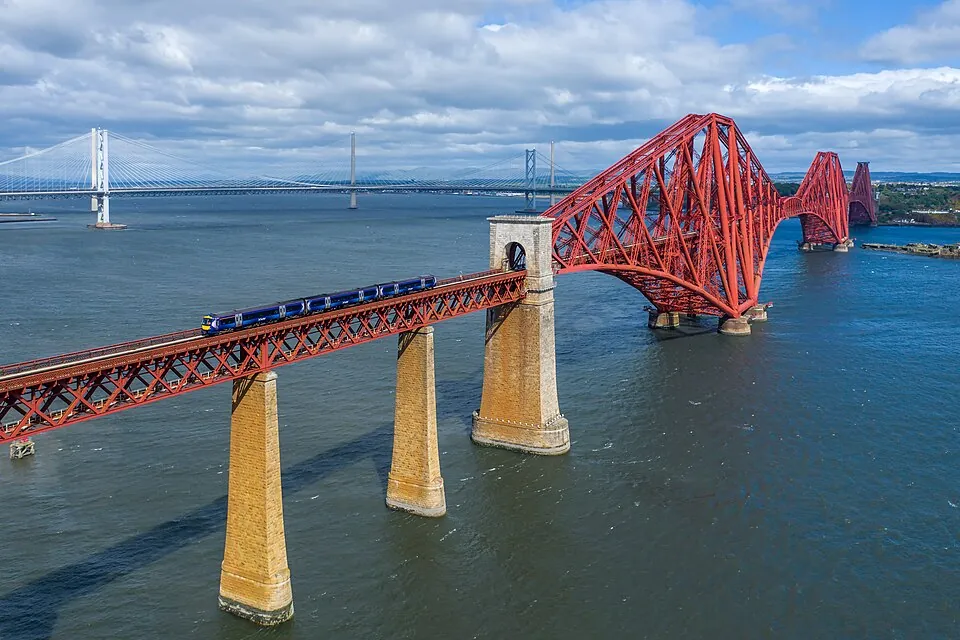
We like Edinburgh–Aberdeen because its landmarks arrive in several quite different forms. The Forth Bridge announces the journey with red steelwork and a high crossing above the firth. Farther north, the Tay Bridge carries the train into Dundee across another broad expanse of water. Beyond the city, the Angus coast gives the journey a more open, maritime character. Montrose adds an inland-looking estuary, while Stonehaven offers the chance to leave the train for a castle on a rocky headland. We recommend treating the railway as the centre of a day out, with one substantial break and the other towns saved for another trip.
The coastal run through Fife overlaps our shorter Fife guide, but this journey continues well beyond Kirkcaldy. Leuchars is the rail connection for St Andrews: that town needs an onward bus, not a quick dash out between trains. Dundee is a particularly practical first break because the waterfront museums stand close to the railway. Arbroath has its abbey and working harbour; Montrose combines a compact town with views across the tidal basin. These places reward different kinds of visit, so decide whether the day is about architecture, local history or walking before committing to several stops.
Stonehaven is our choice for a longer walking break. Dunnottar Castle stands south of the town, and its dramatic setting belongs to a walk with climbs and a return journey to an inland station. The castle’s own description of its distance south of Stonehaven is not the distance from the railway platform. Use the station walk in the stop card and check the castle’s live visitor information before setting out. Wind or access restrictions can change what is possible at a coastal ruin.
Aberdeen makes a useful overnight finish when continuing towards Inverness or returning south on another day. We favour a two-day version for anyone combining Dundee with Dunnottar: enjoy the bridges and a museum first, then give Stonehaven its own generous break. Riding straight through remains worthwhile, but the stop cards make the towns part of the trip instead of a list of names heard over the train’s announcement system.
Heading from Edinburgh towards Aberdeen, the Forth crossing gives two different windows. The right faces east along the Firth towards the North Sea; the left faces west towards the Forth Road Bridge and the Queensferry Crossing beyond it. Returning south towards Edinburgh reverses that choice: left for the eastern Firth, right for the road bridges. These directions follow the operator’s published east-and-west geography.
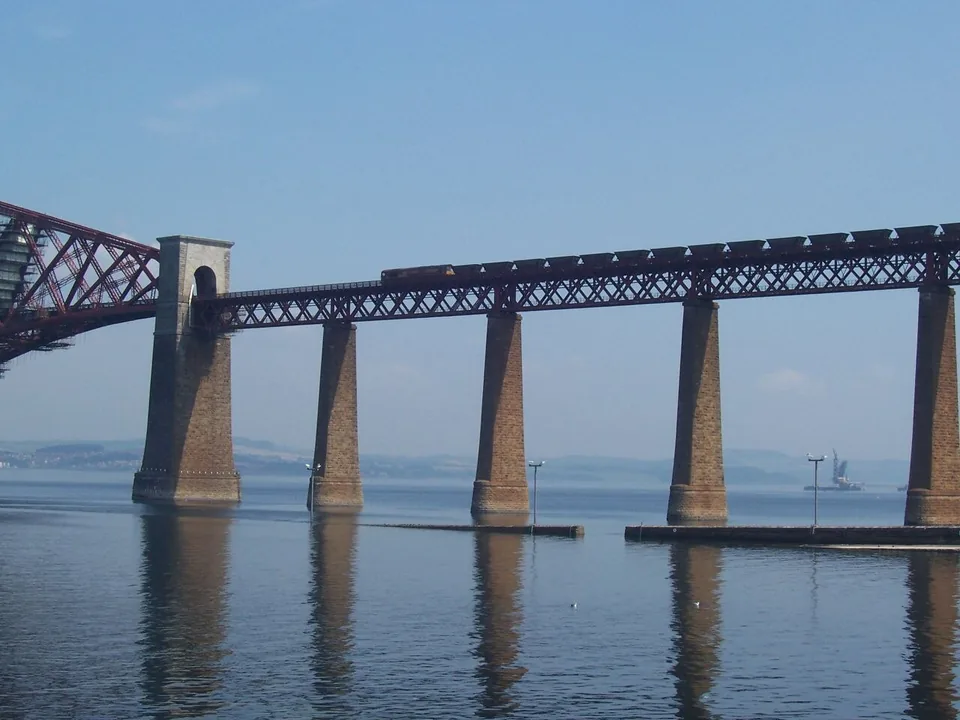
The railway bridge’s steel structure surrounds the train, so it is visible from both sides during the crossing. A request for a view of the Forth Bridge can mean either looking through that structure on board or photographing the whole bridge from shore. Those are different experiences. The coast-side recommendation for the longer Aberdeen journey should not be read as a claim that one window alone shows the railway’s steelwork.
Dalmeny and North Queensferry are the stations used for a short crossing between the two shores. A visitor travelling onwards to Aberdeen needs to check whether the chosen service calls at the intended stop; an intercity journey and a local viewpoint outing need not have the same stopping pattern. Our dedicated Forth Bridge guide explains the shore options without turning them into guaranteed calls on every longer train.
For photographs from land, separate the railway bridge from the neighbouring road bridge’s pedestrian route. The Forth railway bridge has no public walking crossing. Use the official viewpoint and trail information for North and South Queensferry, and check live pedestrian access before planning a walk over the road bridge. On the train, settle into the available seat before the crossing and keep the longer Fife coast in mind when choosing the rest of the journey.
Choose one main stop for a day out. Distances are one way from the station unless a circuit is stated; walking times are our estimates except where the attraction publishes one. Allow-time suggestions include time to look around.
Check the next train back before leaving the station
Request stop: No — use a service shown as calling here.10
What is nearby
V&A Dundee — Scotland’s design museum brings the waterfront architecture seen from the train into much closer view; its galleries and public spaces can anchor a break without a long town transfer.
From the platform
Leave the station towards the waterfront and use the pedestrian crossings for the museum beside Discovery Point. The published foot distance is to V&A Dundee; time inside the galleries is additional.
Access: Dundee station provides platform-access information through National Rail. V&A Dundee has lifts and accessible facilities; use its access guide for the entrance and any current arrangements. The public waterfront transfer involves road crossings.
Food and drink
Tatha Bar & Kitchen — The restaurant inside V&A Dundee gives the stop a named food option beside the exhibitions and the River Tay.
Check the next train back before leaving the station
Request stop: No — use a service shown as calling here.14
What is nearby
Arbroath Abbey — The ruined abbey is associated with the Declaration of Arbroath. It is an inland town visit, distinct from a longer outing along the cliffs.
From the platform
From the station follow the public town-centre route towards Abbey Street and the signed entrance. Historic Environment Scotland publishes the half-mile station distance. Return by the streets, leaving separate time if you also go down to the harbour.
Access: The abbey’s paved entrance approach and historic ground have their own access conditions. Check Historic Environment Scotland’s guide for available areas, and National Rail for the platform used on the return; the ruin is not wholly step-free.
Food and drink
Webmor’s Coffee Shop — Visit Angus lists this West Port coffee shop among the town’s food stops, convenient for combining the central streets with the abbey.
Check the next train back before leaving the station
Request stop: No — use a service shown as calling here.18
What is nearby
Montrose Museum — The museum’s collections connect local archaeology, the Jacobite story and maritime history. A visit complements the basin view from the railway without requiring a separate reserve transfer.
From the platform
From the station follow Basin View Roundabout and Western Road, then the public paths through the centre towards High Street, Churchyard Walk and Museum Street. The walk finishes at the museum; the visitor centre on the opposite side of the basin is a different outing.
Access: Use National Rail for the access to the required platform. The town approach includes pavement crossings and changes of level; ask ANGUSalive about access inside the historic museum before relying on an entirely step-free visit.
Food and drink
Jane’s Tearoom — Visit Angus lists the tearoom at Castle Place, a central refreshment stop that can be combined with the museum and town streets.
Check the next train back before leaving the station
Request stop: No — use a service shown as calling here.20
What is nearby
Dunnottar Castle approach — The ruined fortress occupies a rocky coastal outcrop. This walking distance ends on the mapped approach beside the castle; moving around the ruin and its final entrance is additional.
From the platform
The inland foot route follows Arduthie Road, Arduthie Street and Carron Terrace before the public paths towards Dunnottar. It differs from an extended route via the harbour and cliff path. Return by the same mapped route if using the stated distance.
Access: The walk includes slopes and uneven paths, and the castle approach has steep steps. Dunnottar is not a step-free attraction and can restrict access in adverse conditions. Check its live visitor information and the station’s platform arrangements before committing to the break.
Food and drink
The Station Hotel — The hotel beside the station serves meals and drinks, useful after the uphill return from a castle walk.
Eight route photographs link to their original Wikimedia Commons pages for the creator, licence and reuse terms.
How to get to the Edinburgh–Aberdeen
By train
Reach Edinburgh Waverley on the East Coast Main Line from London and north-east England, or by Scottish connections from Glasgow and elsewhere. At Waverley choose an Aberdeen train via Fife and Dundee; a journey to Aberdeen via another route will not provide this sequence of coast and bridges. Leuchars is the interchange for a bus visit to St Andrews.224
By bus
St Andrews is reached by Stagecoach buses from Leuchars railway station. Use the bus operator’s current planner for the particular connection and return to Leuchars before continuing north. Edinburgh’s regional coach arrivals use a different interchange from Waverley, so plan the city transfer as part of the journey.625
By car
National Rail publishes the station parking arrangements at Edinburgh Waverley, Dundee and Stonehaven. Starting at Dundee avoids taking a car into Edinburgh but omits the two great firth crossings from the rail trip. Match the chosen car park with the station to which you can realistically return.261020
Returning from the far end
Return south from Aberdeen on a service that follows the coastal route through Dundee if you want the same scenery in reverse. Aberdeen also connects west towards Inverness, which makes this journey a useful part of a longer Scottish rail holiday. Plan the final rail leg before beginning a substantial Stonehaven walk.227
Day trip or overnight
Yes: a through ride with a Dundee or Arbroath break works as a day out when the return service fits. Combining Dundee with the full Stonehaven castle walk is better spread over two days.2
Accessibility
Access varies between the train, station and attraction. V&A Dundee publishes lifts and accessible facilities, while Dunnottar involves steep steps. Arrange rail assistance for each intended stop and check the actual visitor route.22
When to go
Use a daylight departure for the Forth and Tay crossings and the North Sea coast. Check the complete itinerary before deciding whether Dundee or Stonehaven will be the main break in the through journey.2
Book the specific Edinburgh–Aberdeen journey through the operator whose train you intend to use. ScotRail and the longer-distance operators do not necessarily offer the same calling pattern, so a ticket search for the whole journey is only the beginning when Arbroath or Stonehaven is part of the plan. Check the conditions attached to the fare before adding a break of journey. An Advance ticket is tied to its booked service and is a poor match for an unplanned castle walk. For two substantial stops, price the actual sequence of journeys and compare it with an appropriate flexible ticket; we do not assume that splitting the trip will be cheaper.221
Photography
The bridge crossings are moving viewpoints: work with the window available to you and keep the camera clear of reflections. On the Angus coast, wider pictures show how close the railway comes to the water. At Montrose, look across the basin as well as towards the sea; the estuary changes with the tide. Dundee’s waterfront is easier to photograph carefully after getting off. For Dunnottar, stay on the signed paths and respect barriers around the cliffs and castle approach; a dramatic photograph does not require leaving the public route.51
On board
This is an ordinary passenger railway, with ScotRail services and other operators on parts of the route. Facilities depend on the particular train: check the operator shown in the booking, especially for cycle reservations, luggage and assistance. Keep a drink and food for the coastal stretch even when planning a café stop, and check the available catering with the operator before boarding. A coast-facing seat is useful, but changing direction at a stop or boarding another train can change which end of the carriage faces forwards.22223
Frequently asked questions
How do I get to the start of the Edinburgh–Aberdeen?
Begin at Edinburgh Waverley, reached by the East Coast Main Line or Scottish rail connections. Choose an Aberdeen departure via Fife and Dundee. Haymarket can be a convenient alternative boarding point when the chosen service calls there.2
Can St Andrews be visited on this journey?
Yes: leave at Leuchars and take the onward Stagecoach bus. St Andrews is not a railway station on this route, so include the bus out and back before booking the next northbound leg.6
Which side faces the sea towards Aberdeen?
The right gives the main Fife and North Sea views. Montrose Basin is on the left approaching Montrose from Arbroath; on the return journey reverse these recommendations.1
How long is the Edinburgh–Aberdeen?
Use the dated operator timetable for the complete Edinburgh–Aberdeen ride. A Dundee museum stop makes it a full-day outing; a Dunnottar walk adds a substantial break, so we recommend an overnight when combining both.28
Which side is best on the Edinburgh–Aberdeen?
The water lies south of the railway on the coastal approach to Kirkcaldy and east of the railway on the Angus and Aberdeenshire coast. Choose the right for these stretches. Montrose Basin lies inland, on the left when approaching Montrose from Arbroath. Both windows have open-water views on the Forth and Tay bridges.11
Is the Edinburgh–Aberdeen suitable for a day trip?
Yes: a through ride with a Dundee or Arbroath break works as a day out when the return service fits. Combining Dundee with the full Stonehaven castle walk is better spread over two days.23456
Is the Edinburgh–Aberdeen accessible?
Access varies between the train, station and attraction. V&A Dundee publishes lifts and accessible facilities, while Dunnottar involves steep steps. Arrange rail assistance for each intended stop and check the actual visitor route.22223812165
Further reading
Read the route
Chosen for this line, its train type or the wider pleasure of slow rail travel.
Physical edition
Slow Trains Around Britain
by Tom Chesshyre
A contemporary, slow-travel circuit of Britain for readers who enjoy the journey as much as the destination.