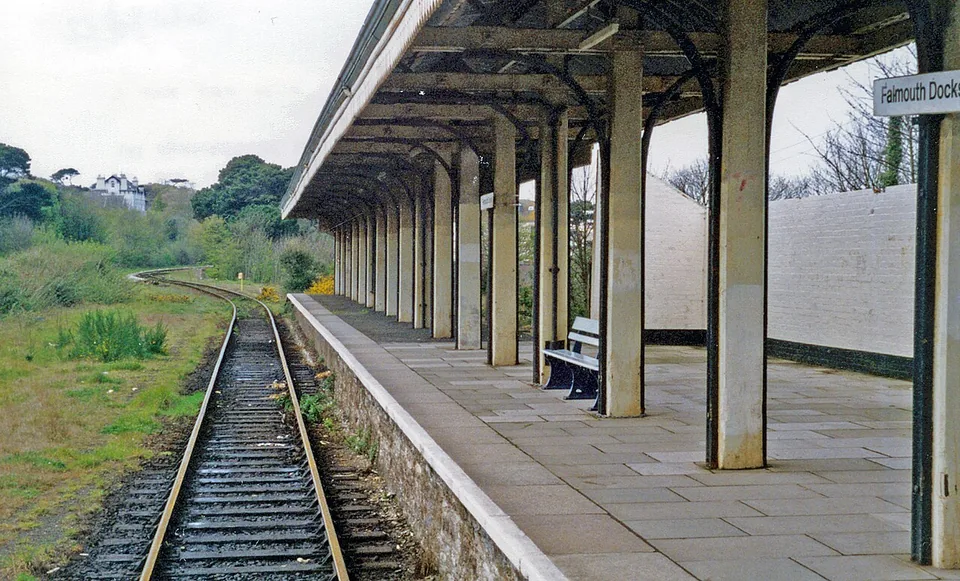
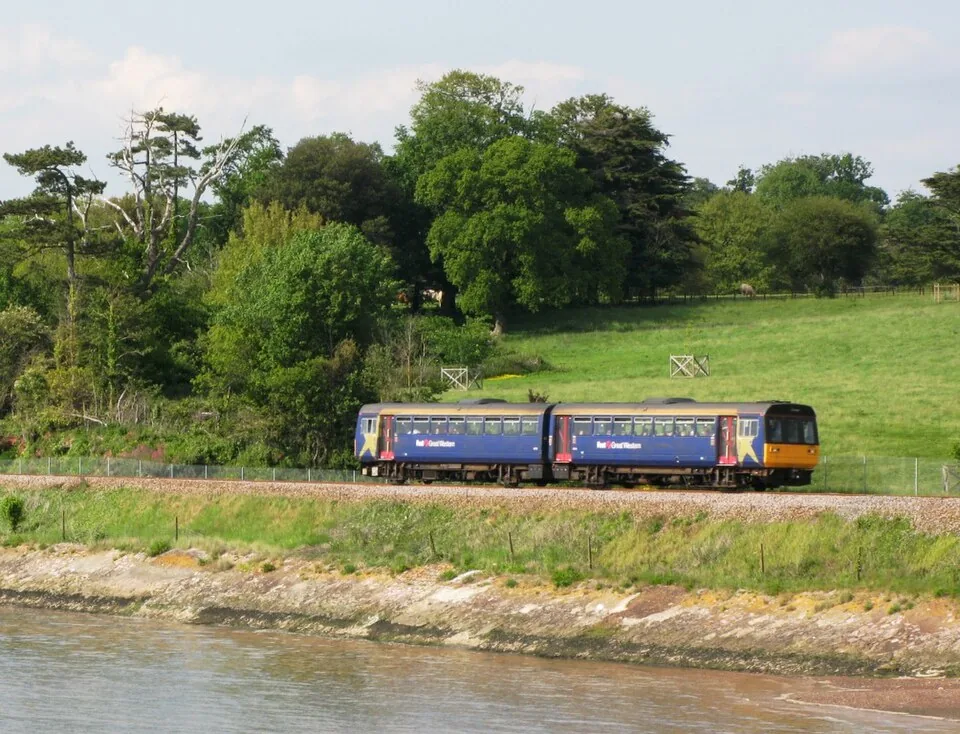
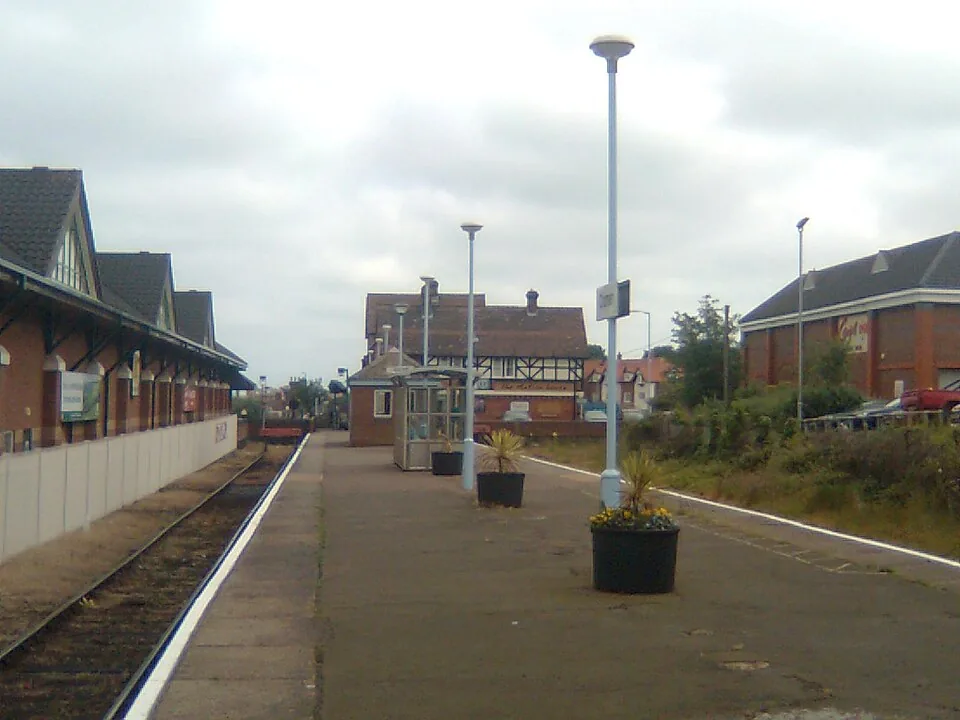
A normal scheduled Great Western Railway service linking Truro with Penryn and Falmouth. The compact journey leaves the Cornish main line for green valleys and university country before finishing among Falmouth's maritime landscape, with three stations serving different parts of the town.
Use the operator’s timetable to choose your outward and return services.4
Reservations
A reservation rarely guarantees a particular side or that the seat aligns with a window.
Typical train
See the operator’s train information for onboard facilities.
Pick your window
Which side to sit on the Maritime Line
Penryn Creek lies to the left on the southbound departure from Penryn towards Falmouth.2
left side
Truro to Falmouth Docks
Facing forwards: favour the left window.
Penryn Creek lies to the left on the southbound departure from Penryn towards Falmouth. This is a preference for the creek-side setting; buildings and trees interrupt the water view, and the harbour is explored on foot at the destination.8
right side
Falmouth Docks to Truro
Facing forwards: favour the right window.
Sit on the right (facing forwards) for Penryn Creek on the approach to Penryn towards Truro; buildings and trees interrupt the water view.8
Why ride it
The view from the train
We like the Maritime Line as a change of pace after a long journey into Cornwall. Truro is the junction, but the branch soon gives the trip its own character: smaller settlements, green folds in the landscape and the approach to a working harbour town. Keep watching between stations, not just at the destination. The railway is a useful introduction to Falmouth, although much of the maritime sightseeing happens after you leave the carriage.
Penryn makes a good counterpoint to the bustle of Falmouth. It is a historic market town, while the three Falmouth stations give you choices about where to begin your walk. Decide which part of town matters most before buying the ticket. A harbour afternoon, a beach visit and a castle visit can involve different walking routes. Taking the train to the very end is enjoyable in itself, but it does not automatically put you closest to everything you want to see.
Cornish valleysPenrynFalmouth Harbour
Best stops on the Maritime Line
Choose one main stop for a day out. Distances are one way from the station unless a circuit is stated; walking times are our estimates except where the attraction publishes one. Allow-time suggestions include time to look around.
Published route runs from Penryn station to Falmouth Town station via Flushing; allow separate ferry waiting and crossing time.
Check the next train back before leaving the station
Request stop: No — use a service shown as calling here.15
What is nearby
Penryn–Flushing–Falmouth walking route — This linear outing links Penryn’s historic streets and riverside paths with a ferry crossing and a finish at Falmouth Town station.
From the platform
Exit the station and turn right uphill to the zebra crossing, then descend Helston Road into Penryn. Continue past the town hall towards St Gluvias Street and the riverside path for Flushing; use the ferry to Falmouth and the guide’s route to Falmouth Town station.
Access: Penryn platforms have step-free access, but this walking route does not: it includes two steep slopes, uneven ground, stepping stones and stiles. The ferry has separate boarding arrangements and must be checked before setting out.
Food and drink
Muddy Beach — The community railway identifies this café at Jubilee Wharf below the town centre.
Allow time: Allow 3–4 hours for the full walk, a café or pub stop and the ferry; confirm the ferry connection first.
The museum publishes five minutes from Falmouth Town; distance follows the mapped walking route to its Discovery Quay building.
Check the next train back before leaving the station
Request stop: No — use a service shown as calling here.15
What is nearby
National Maritime Museum Cornwall — The waterfront museum explores Cornwall’s maritime connections and the wider world of boats and the sea.
From the platform
Leave via The Dell and follow Arwenack Avenue and Avenue Road towards Arwenack Street, then continue by the quay approach to the museum. The measured route is about 0.32 miles, descending towards Discovery Quay.
Access: Falmouth Town has some step-free platform access. The museum has a level entrance, but its current access notice reports the Tower lift out of service, so the Tidal Zone and Lookout are not accessible to wheelchair users or pushchairs; check that notice before travelling.
Food and drink
Waterside Café — The museum’s café looks across the harbour and is a convenient refreshment stop during the visit.
Allow time: Allow 2–3 hours for the museum and waterfront, with longer for a meal.
Check the next train back before leaving the station
Request stop: No — use a service shown as calling here.15
What is nearby
Pendennis Castle — English Heritage’s fortress stands on the headland above the docks, with coastal views and military-history displays.
From the platform
From the station, follow the signed road approach uphill towards Pendennis Headland and the castle entrance. English Heritage publishes about half a mile from Falmouth Docks; allow longer for the ascent than the return downhill.
Access: The station platforms have step-free access, but the castle approach climbs. Access inside the keep includes steps and spiral stairs, and the estate has uneven and sloping ground; English Heritage’s access page sets out the alternatives for the barrack block and drop-off point.
Food and drink
Pendennis Castle Tea Room — English Heritage lists the tea room within the castle visitor facilities, after the uphill approach.
Allow time: Allow 2–3 hours for the castle and headland, including the station walk.
Eight route photographs link to their original Wikimedia Commons pages for the creator, licence and reuse terms.
How to get to the Maritime Line
By train
Change at Truro from the Cornwall main line for the Maritime Line towards Falmouth Docks. GWR’s timetable includes main-line connections from Plymouth and Penzance; for London Paddington or Exeter, plan the through main-line journey to Truro before the branch transfer.1516
By bus
For an arrival by bus, distinguish Truro’s railway station from the city’s bus station before connecting to the branch. The community railway links Traveline for a combined bus-and-walking approach to the railway entrance; Falmouth ferries are separate services if adding a river crossing.242514
By car
Truro station has published parking for a branch-line start on the main line. Falmouth Town and Falmouth Docks also have parking listed in the GWR route guide, but a linear Penryn–Flushing walk can leave the car behind at a different station unless its return train is included.615
Returning from the far end
Return from Falmouth Docks or Falmouth Town on a Truro-bound train for the main line. If walking from Penryn via Flushing, confirm that the passenger ferry is running before leaving Penryn; the route finishes at Falmouth Town, so it does not require walking back along the same shore.151214
Day trip or overnight
For a simple day trip, ride to Falmouth Town or Falmouth Docks and explore the town, harbour or a nearby waterfront attraction before returning from the most convenient station. Check walking distances rather than assuming the terminus is best for every sight. An overnight in Falmouth gives more time for the coast; plan any boat trip independently and confirm its accessibility and sailing status.4
Accessibility
National Rail currently lists Truro as step-free category B1: all platforms have step-free routes, but these may involve long or steep ramps or streets, and there are no lifts. Falmouth Docks is category A with step-free access to its platform, also without lifts. Facilities and onward gradients vary at intermediate stations and around hilly Falmouth, so check the exact stop and arrange GWR Passenger Assist or a boarding ramp when useful.5
When to go
Use the published Maritime Line services when choosing the travel season for this scheduled railway outing. Spring and summer provide longer daylight for Falmouth's harbour, gardens and coast, while major summer events can make services busier. Autumn can be quieter; in winter, check coastal weather, daylight, engineering work and GWR's current timetable close to travel.4
Tickets
Start with a return between Truro and the Falmouth station that suits the day. The community rail guide explains local ticket options and links to GWR booking; use those pages for the fare and restrictions that apply to your departure. If you intend to stop in Penryn, check break-of-journey permission before paying. For a wider Cornish trip, compare the named rover or ranger products with separate tickets, using the published coverage map. A ticket for the railway does not include a museum, castle or boat excursion unless the product explicitly says so.14
Photography
For photographs, we would tell the story in three parts: the branch-line countryside, the creek-side setting around Penryn and Falmouth on foot. The left-hand window towards Falmouth is our choice for Penryn Creek, with the right-hand window useful on the return. Water can be hidden by buildings and trees, so do not expect an uninterrupted harbour panorama from the train. Keep a camera ready for a brief opening, then enjoy the rest of the ride. At the destination, a longer pause beside the harbour gives more control over framing than a moving carriage window.18
On board
This is an ordinary GWR journey, so we would pack for the time spent exploring Falmouth as well as the short train ride. Keep a day bag manageable and avoid building the plan around a particular carriage facility. The assistance pages and station listings are more useful than assuming every small branch station works like Truro. If you need a ramp or help with a change, describe the exact outward and return stations when arranging assistance. A seat on the creek side is a preference, while a usable boarding route and comfortable walking itinerary are the essentials.567
Frequently asked questions
How long is the Maritime Line?
About 25 minutes. For the Maritime Line journey, use the operator’s dated timetable to choose the departure, leaving separate time for the station transfer and any planned visit around Falmouth.1
Which side is best on the Maritime Line?
Penryn Creek lies to the left on the southbound departure from Penryn towards Falmouth. This is a preference for the creek-side setting; buildings and trees interrupt the water view, and the harbour is explored on foot at the destination.8
Is the Maritime Line suitable for a day trip?
Yes. Use the short ride to give most of the day to Penryn or Falmouth, with one main stop and a simple return. Choose your Falmouth station before setting off; the terminus is not the nearest stop for every attraction.13
Is the Maritime Line accessible?
The endpoint station listings describe step-free routes, but Truro can involve ramps or streets between platforms. Check the station you actually intend to use in Falmouth and the gradients beyond it, then arrange GWR assistance if needed.567
Does the train run along Falmouth harbour?
The branch introduces the area through countryside and Penryn’s creek-side setting. Save the harbour walk for Falmouth itself. Choose a town station by the destination you want to reach, not by the expectation of a continuous sea view.13
How do I get to the start of the Maritime Line?
Change at Truro from the Cornwall main line for the Maritime Line towards Falmouth Docks. GWR’s timetable includes main-line connections from Plymouth and Penzance; for London Paddington or Exeter, plan the through main-line journey to Truro before the branch transfer.1516
Further reading
Read the route
Chosen for this line, its train type or the wider pleasure of slow rail travel.
Physical edition
Slow Trains Around Britain
by Tom Chesshyre
A contemporary, slow-travel circuit of Britain for readers who enjoy the journey as much as the destination.