Ride the Welsh Marches Line from Newport to Shrewsbury for Abergavenny, Hereford, Ludlow and the Shropshire Hills, with useful station walks and stops.
Use the operator’s current timetable for the individual calling pattern2
Reservations
Check the chosen operator’s reservation arrangements before booking
Typical train
See the operator’s train information for onboard facilities.
Pick your window
Which side to sit on the Welsh Marches Line
Choose the left northbound for Sugar Loaf, Stokesay Castle and the Long Mynd; the Skirrid and Caer Caradoc reward the opposite window.3
left side
Newport to Shrewsbury
Facing forwards: favour the left window.
The railway runs north along the eastern side of Abergavenny: Sugar Loaf is to the north-west, favouring the left, and the Skirrid is to the north-east, on the right. Farther north, Stokesay Castle lies west of the line and the Long Mynd west of Church Stretton, both left-hand subjects. Caer Caradoc rises east of Church Stretton on the right.1
right side
Shrewsbury to Newport
Facing forwards: favour the right window.
The right favours the Long Mynd, Stokesay Castle and the Sugar Loaf side of Abergavenny. Keep the left in mind for Caer Caradoc and the Skirrid. Both windows matter on the winding approaches through the border country.1
Why ride it
The view from the train
We like the Welsh Marches Line for the way it joins large landscape with towns worth exploring on foot. Beginning at Newport, the railway heads inland through south-east Wales towards Abergavenny, then crosses into Herefordshire and continues through Shropshire to Shrewsbury. This guide covers that Newport–Shrewsbury journey, not every place reached by the longer-distance trains using the line. It is a useful border-country day out because a castle, cathedral or hill walk can be part of a normal rail journey, with no need to hire a car for the whole route.
Abergavenny gives the southern section its mountain backdrop. The town’s museum stands within the castle grounds, close enough for a focused history stop with time left for the centre. Hereford offers a different scale: a working cathedral, the Mappa Mundi and Chained Library collections, and streets leading down towards the Wye. Leominster brings a smaller market-town break, with its priory and independent shops. We recommend choosing between a substantial Hereford visit and several shorter town breaks, because a rich cathedral collection deserves more than the spare gap before the next train.
Farther north, Ludlow is an excellent place to make the journey into an overnight holiday. Its castle stands above the River Teme, with the market streets immediately outside. Craven Arms is useful for Stokesay Castle and the Shropshire Hills Discovery Centre; the former is a walk from the station, while the latter introduces the wider landscape. These are separate places and should not be bundled into a single short transfer. Church Stretton gives the route its clearest walking opportunity, with Carding Mill Valley reached from the town and the higher Long Mynd beyond.
The most satisfying plan is a through ride with one main outing, or a two-day trip divided at Ludlow or Hereford. Hill walks and historic buildings ask for different preparations: wet grass and steep paths on the Long Mynd are not comparable with a paved approach to a café. Use the stop cards for the actual station transfer, then the attraction’s own access information for what happens after arrival. Shrewsbury supplies onward rail connections at the northern end, while Newport links the route with the South Wales main line and the journey home.
Choose one main stop for a day out. Distances are one way from the station unless a circuit is stated; walking times are our estimates except where the attraction publishes one. Allow-time suggestions include time to look around.
Check the next train back before leaving the station
Request stop: No — use a service shown as calling here.12
What is nearby
Abergavenny Museum and Castle — The museum tells the history of the town and wider area from a building on the castle motte. The surrounding ruins and grounds add an outdoor part to the visit.
From the platform
Follow the signed town route from the station towards Castle Street. The museum’s own pre-visit information publishes the half-mile distance. Allow for the uphill castle approach, the visit and the outward walk back to the platform.
Access: The grounds have uneven paths and the museum occupies several levels. MonLife explains that access to most areas may need help; read its detailed pre-visit guide. Check the station’s separate platform routes for the direction of travel.
Food and drink
Ambika Social — Visit Monmouthshire lists this coffee shop in Linda Vista Gardens, a separate nearby garden stop after the castle.
Check the next train back before leaving the station
Request stop: No — use a service shown as calling here.16
What is nearby
Hereford Cathedral — The working cathedral also houses the Mappa Mundi and Chained Library museum. Those collections have their own visitor arrangements, so check them before building the day around an interior visit.
From the platform
The measured town route follows Canal Road, Catherine Street and Widemarsh Street, then High Town, Capuchin Lane and Church Street towards the cathedral. Follow the live station signs where transport-hub construction affects the forecourt; a signed diversion may change the walk.
Access: Station forecourt works and cathedral access both need checking. The cathedral publishes information for its different visitor areas; the town transfer includes road crossings and changes of level and should not be assumed to certify every museum doorway as step-free.
Food and drink
Cathedral Café — The cathedral’s own café makes a useful food stop alongside the historic building and its collections.
Check the next train back before leaving the station
Request stop: No — use a service shown as calling here.20
What is nearby
Leominster Priory — The parish church preserves part of the former Benedictine priory. Combine the building with the adjoining town streets and independent shops instead of turning this stop into a distant countryside transfer.
From the platform
Leave the station for Worcester Road and Etnam Street, then use the public approach through Falconer Place towards the priory. Return by the town pavements, allowing extra time if pausing in the shops around Corn Square.
Access: The town route has pavement crossings and gentle gradients. Ask the working church about the appropriate entrance and any current arrangements for a step-free interior visit; National Rail provides the access details for the station separately.
Food and drink
The Merchants House — The café at Corn Square offers food and drinks with a walled courtyard, as listed by Visit Herefordshire.
Check the next train back before leaving the station
Request stop: No — use a service shown as calling here.23
What is nearby
Ludlow Castle — The partly ruined fortress stands above the River Teme. Its courtyards and towers reward time on foot, with the market streets immediately outside the gates.
From the platform
From Station Drive use the town walking route via Portcullis Lane, Attorney’s Walk and Bull Ring, then the Buttercross and Castle Square. The walking route continues into the castle grounds; climbs around the towers and a wider exploration of the ruin are additional.
Access: The route climbs through town and includes older surfaces. The castle is an outdoor medieval ruin with areas inaccessible to wheelchairs and pushchairs; its own access page explains the limitations and accessible toilets.
Food and drink
Chapter 66 — The castle’s current restaurant and café provides a named meal or coffee stop beside the entrance; follow the venue’s live visitor directions.
Check the next train back before leaving the station
Request stop: No — use a service shown as calling here.27
What is nearby
Stokesay Castle — The hall, towers and timber-framed gatehouse make a compact historic outing. English Heritage publishes Craven Arms as the station for the one-mile rail approach.
From the platform
From the station follow the signed route through Craven Arms towards Stokesay, using public pavements and paths. Use English Heritage’s train-access distance, not its longer road-access description south of the town. Include the return walk in the stop.
Access: Stokesay has many small, uneven stairs and historic thresholds; upper rooms are not step-free. Check English Heritage’s access guide for the parts available to you. The station-to-site approach and the building’s interior are separate access questions.
Food and drink
Shropshire Hills Discovery Centre Café — The centre’s café is another Craven Arms stop on School Road. It is a separate destination from the castle, so include time for that additional town movement.
Check the next train back before leaving the station
Request stop: No — use a service shown as calling here.30
What is nearby
Carding Mill Valley — The National Trust’s valley is a starting point for walks into the Shropshire Hills. The one-mile station approach reaches the visitor area; reservoir and upland trails add their own distance and ascent.
From the platform
Walk through Church Stretton towards the valley, following the visitor signs along local roads. The approach climbs and shares some space with traffic; after the visitor area choose the signed trail for the intended walk. Return downhill through the town to the station.
Access: The Trust’s access guide describes the visitor area separately from the hills. Higher paths are steep, rough and sometimes muddy; the reservoir route includes steps. A step-free platform does not make an upland loop suitable for a wheelchair.
Food and drink
Chalet Pavilion Tea Room — The National Trust tea room at the visitor area serves food, cakes and drinks, keeping the refreshment break with the valley outing.
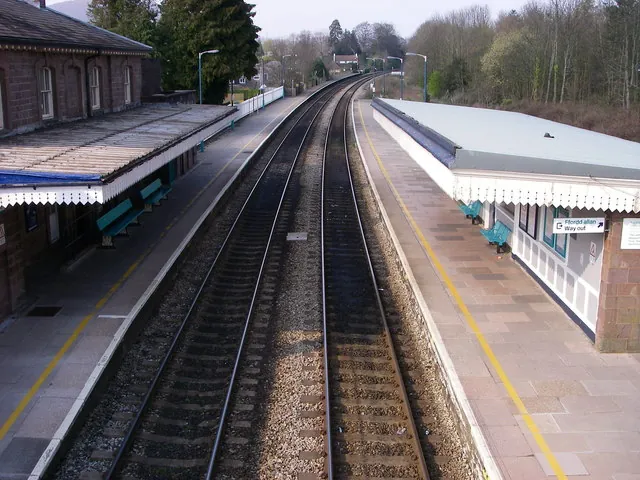
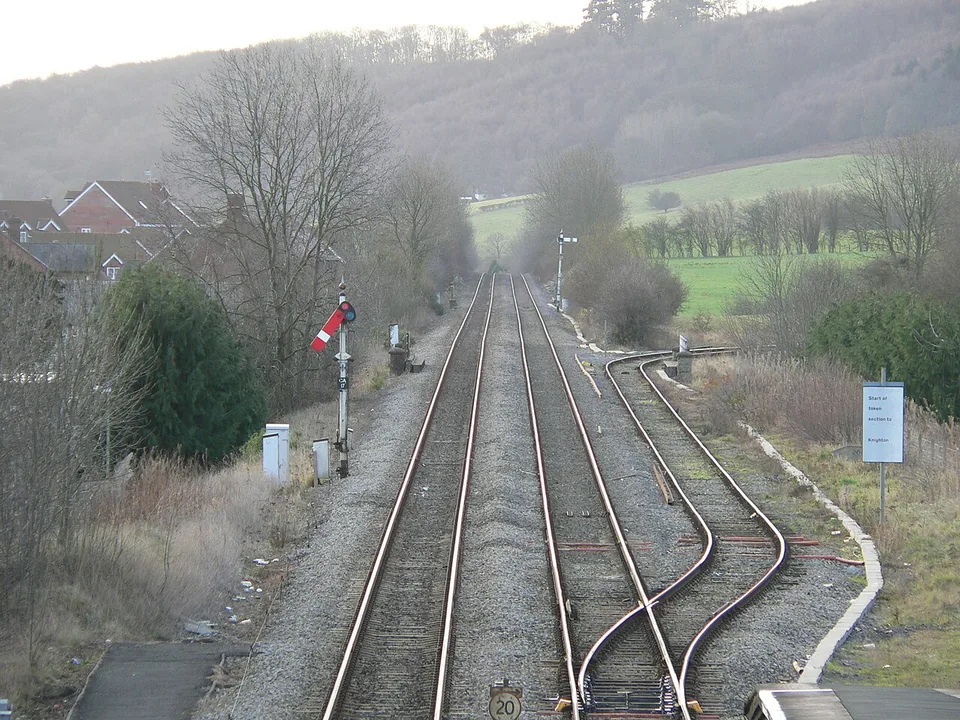
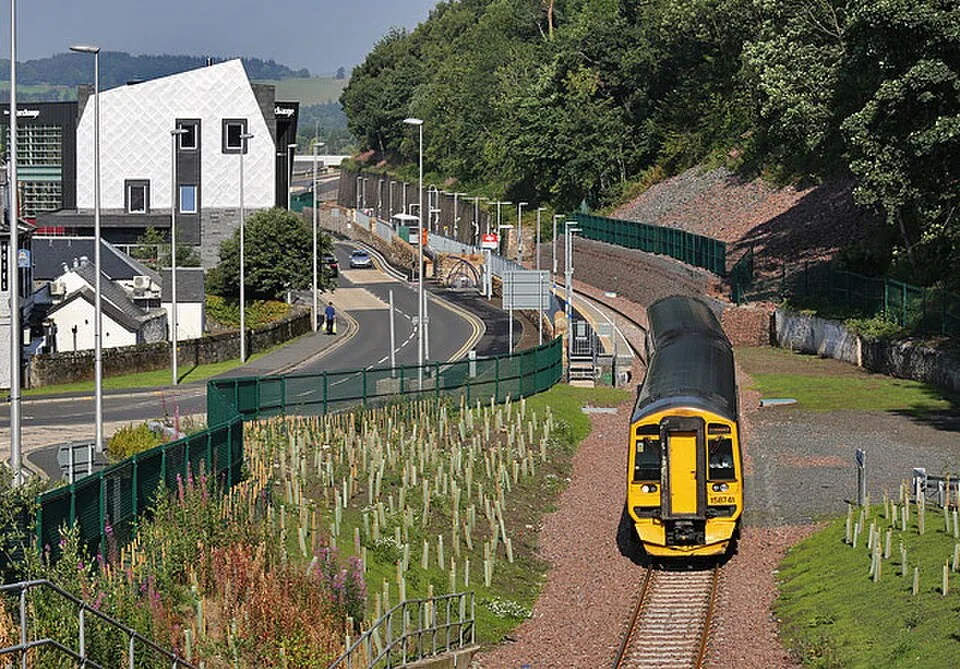
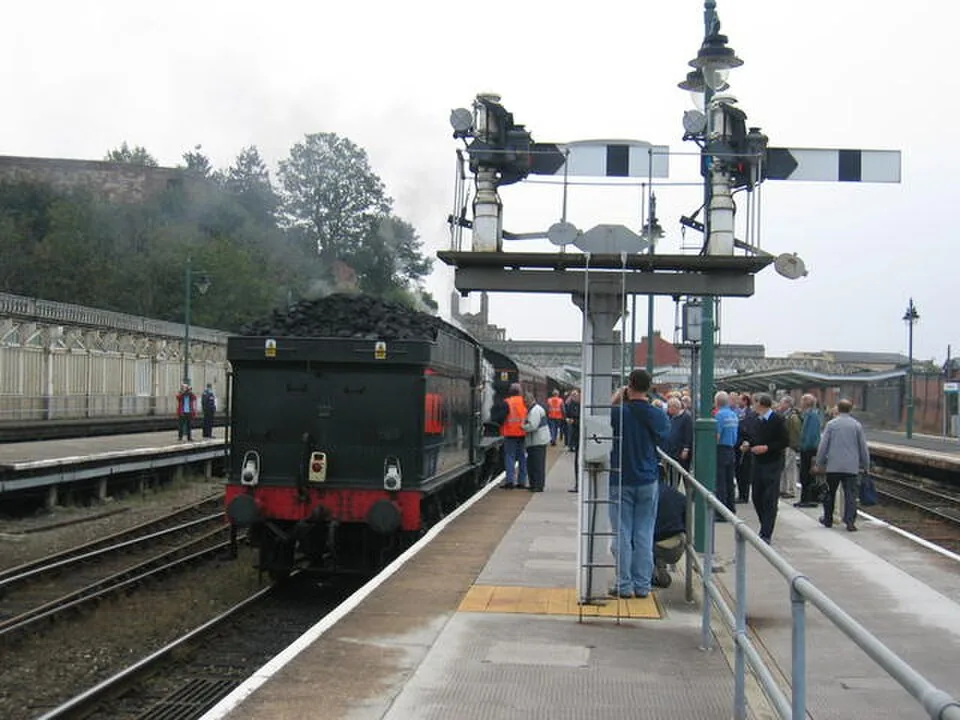
Eight route photographs link to their original Wikimedia Commons pages for the creator, licence and reuse terms.
How to get to the Welsh Marches Line
By train
Newport is on the South Wales main line, with GWR connections from London Paddington and Bristol, and Transport for Wales links from Cardiff and other Welsh stations. Change for a northbound service via Abergavenny and Hereford towards Shrewsbury. Some services start farther west, so the train destination can name a place beyond this guide.234
By bus
For Shropshire walking extensions, check the current Shropshire Hills Shuttle information before relying on a bus beyond Church Stretton. This is a separate onward service, with its own operating pattern. Local buses also connect the Marches towns; use the county transport pages to choose the particular stop and direction.3536
By car
National Rail lists station parking at Newport, Abergavenny and Hereford. Starting in a smaller Marches town can make a return day out easier than driving to Newport, but check the return service to the same station before setting out on foot.371216
Returning from the far end
Shrewsbury connects with services towards Birmingham, Chester and the Cambrian routes as well as southbound trains through the Marches. For a car left along this line, choose a train that calls at that specific station. A later southbound departure is a separate service to plan, particularly after an extended hill walk.238
Day trip or overnight
Yes: one town visit or the Carding Mill Valley outing can anchor a day trip. Hereford’s collections plus a full Long Mynd walk need more time, so choose an overnight or separate visits.2
Accessibility
There is no single access answer for the whole line. Historic castles include stairs and rough ground, while upland walks can be steep and muddy. Use the operator’s station information and each attraction’s access guide together.21
When to go
Keep Stokesay and the Long Mynd section in daylight for the northbound view. Check the castle and town attractions independently of the train when a visit is the reason for leaving the railway.2
Use Transport for Wales to plan Newport–Shrewsbury and any intermediate legs. Through trains may continue beyond the limits of this guide, but the station list for the chosen departure decides whether a particular break works. Check the ticket’s break-of-journey conditions before buying. A fixed Advance journey and an open-ended walk up Carding Mill Valley make an awkward combination unless the return to the platform has a comfortable margin. For an overnight at Ludlow, search the two travel days separately and compare the available products with your actual plan; we do not promise that a particular pass or fare is always cheapest.231
Photography
The mountains around Abergavenny and the hills at Church Stretton are the broad window subjects; Stokesay is a shorter glimpse that rewards attention near Craven Arms. Get off for the detailed work. Ludlow’s castle walls and streets have much more to offer at walking pace than from a passing train, and Hereford’s cathedral is an indoor as well as an outdoor subject. Respect services in the working churches and each attraction’s photography arrangements. On the Long Mynd, keep photographs on the named path when mist or wet ground reduces visibility.114338
On board
Transport for Wales operates different trains across its network, so use the facilities shown for the departure you book. Arrange assistance for the individual stations in the itinerary, not just Newport and Shrewsbury. The castle and hill stops can involve a significant outdoor walk after leaving the platform; boots, a waterproof layer and a drink should remain easy to reach in the luggage. Food for a longer ride can be bought during the Hereford or Ludlow break, with the named cafés linked in the cards below.322
Frequently asked questions
How do I get to the start of the Welsh Marches Line?
Reach Newport on the South Wales main line from London Paddington, Bristol or Cardiff, then join a northbound train via Abergavenny and Hereford towards Shrewsbury. Check the departure’s complete calling pattern before selecting a stop.234
Can Stokesay Castle be reached on foot from the train?
Craven Arms is the rail stop for Stokesay. Use the castle’s published station-walk directions and allow for the outward and return walk as well as the visit; the road-driving distance from the town is a different figure.24
Is Carding Mill Valley a step-free hill walk?
No. The station approach and the higher valley paths are separate parts of the outing. The National Trust publishes specific access information; the reservoir and upland walks include uneven or steep ground and some steps.3928
How long is the Welsh Marches Line?
The Newport–Shrewsbury rail journey should be checked in Transport for Wales’s current timetable. With a cathedral, castle or valley outing, allow a full day; two major stops are more comfortable with an overnight.2
Which side is best on the Welsh Marches Line?
The railway runs north along the eastern side of Abergavenny: Sugar Loaf is to the north-west, favouring the left, and the Skirrid is to the north-east, on the right. Farther north, Stokesay Castle lies west of the line and the Long Mynd west of Church Stretton, both left-hand subjects. Caer Caradoc rises east of Church Stretton on the right.11
Is the Welsh Marches Line suitable for a day trip?
Yes: one town visit or the Carding Mill Valley outing can anchor a day trip. Hereford’s collections plus a full Long Mynd walk need more time, so choose an overnight or separate visits.2345678
Is the Welsh Marches Line accessible?
There is no single access answer for the whole line. Historic castles include stairs and rough ground, while upland walks can be steep and muddy. Use the operator’s station information and each attraction’s access guide together.32210141821258
Further reading
Read the route
Chosen for this line, its train type or the wider pleasure of slow rail travel.
Physical edition
Slow Trains Around Britain
by Tom Chesshyre
A contemporary, slow-travel circuit of Britain for readers who enjoy the journey as much as the destination.