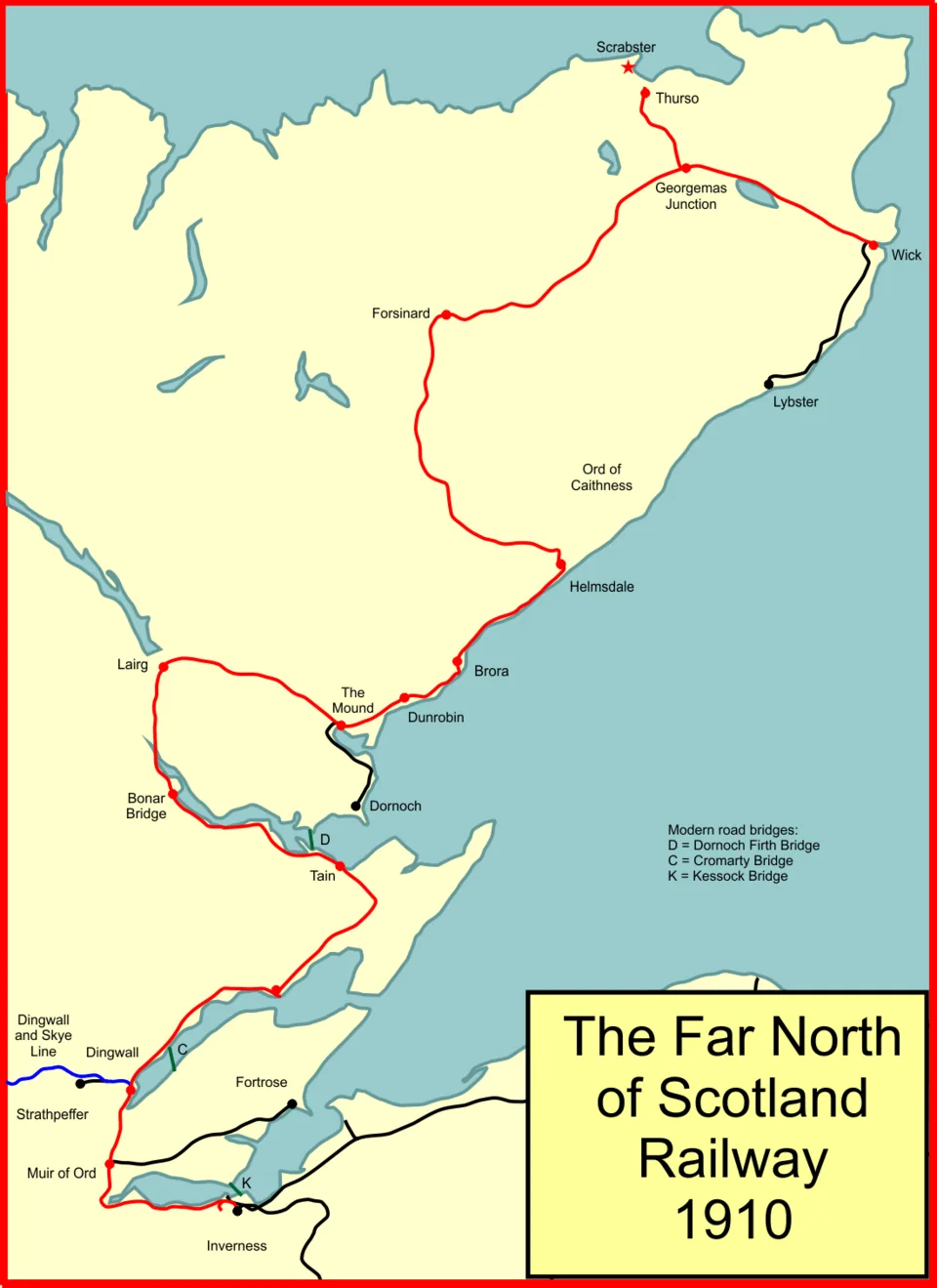
This regular ScotRail journey runs for roughly 174 miles from Inverness through Ross-shire and Sutherland, returns to the North Sea coast around Golspie and Helmsdale, then crosses the peatlands of Caithness before serving Thurso and Wick.
Use the operator’s timetable to choose your outward and return services.2
Reservations
A reservation rarely guarantees a particular side or that the seat aligns with a window.
Typical train
See the operator’s train information for onboard facilities.
Pick your window
Which side to sit on the Far North Line
Choose the right northbound or left southbound for the coastal sections, and watch both sides inland.3
right side
Inverness to Wick via Thurso
Facing forwards: favour the right window.
Sit on the right (facing forwards) leaving Inverness for the coastal sections. The Helmsdale Station guide recommends that side and describes the shoreline run from Golspie to Helmsdale; inland stretches have no stated preference.1
left side
Wick via Thurso to Inverness
Facing forwards: favour the left window.
Sit on the left (facing forwards) towards Inverness for the shoreline between Helmsdale and Golspie. Inland sections and the Thurso branch offer different outlooks.1
Why ride it
The view from the train
The Far North Line leaves Inverness beside the Beauly Firth, reaches Dingwall and continues around the Cromarty Firth towards Invergordon and Tain. An inland loop through Ardgay, Invershin and Lairg precedes the coastal stretch through Golspie, Brora and Helmsdale. The route then turns up the Strath of Kildonan and crosses the Flow Country around Forsinard. Georgemas Junction is the junction for Thurso and Wick. The published stopping pattern determines how the two northern termini fit into a particular journey.
Decide between Thurso and Wick before making the rest of the plan. ScotRail describes Thurso as the northernmost station in the British Isles and Wick as an old herring port. They are distinct destinations, not interchangeable names at the far end of the line. The railway heads towards Thurso from Georgemas Junction and then returns towards Wick on the relevant itinerary. Your booking should name the town you actually want, especially when arranging accommodation or another onward journey.
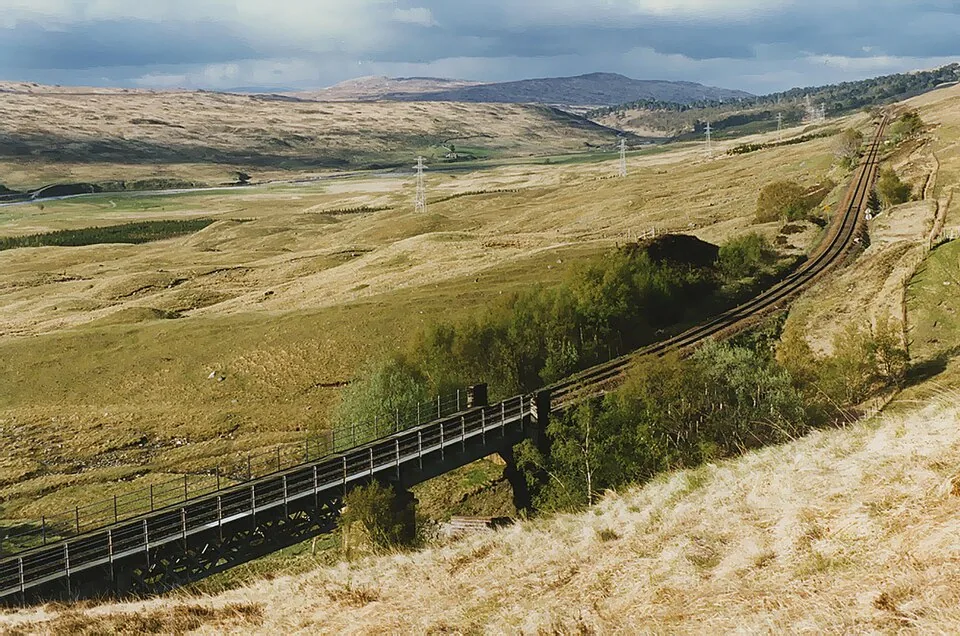
The coast is only one part of the experience. ScotRail's route description follows the Beauly and Cromarty firths, an inland section and the return towards the Sutherland shore. Further north, Forsinard introduces the Flow Country. Give that change of character time to register. A good way to enjoy the ride is to note just a few landmarks and otherwise let the view surprise you.
The coastal sections favour the right northbound, with the return recommendation reversed. Once the line turns inland, watch both sides. A recommended window is useful for choosing a seat, but it should not make the opposite landscape seem unimportant. If you are travelling with someone else, share the occasional view across the carriage without turning the journey into constant seat-swapping. A comfortable position for a long ride is worth keeping.
The Flow Country gives this journey a distinctive destination as well as a distinctive view. The RSPB reserve at Forsinard lets you explore the peatland landscape from its trails and lookout, with the visitor centre in the former station building. If that is the main reason for your visit, devote the break to it instead of treating it as one more stop on a rushed trip to the terminus. Alternatively, enjoy the landscape from the train and save the reserve for another journey.
Cromarty FirthHelmsdale coastThe Flow Country
Best stops on the Far North Line
Choose one main stop for a day out. Distances are one way from the station unless a circuit is stated; walking times are our estimates except where the attraction publishes one. Allow-time suggestions include time to look around.
Check the next train back before leaving the station
Request stop: No — use a service shown as calling here.2
What is nearby
Tain & District Museum and Clan Ross Centre — The museum introduces the history of the town and Clan Ross, within the historic centre.
From the platform
Leave by Station Road and follow Chapel Road and Castle Brae into the museum area, about 0.25 miles. The route climbs from the railway towards the town centre.
Access: National Rail gives Tain category B1 access, so step-free platform routes can involve ramps or streets. The climb into town remains part of the walk; ask the museum about its own access before visiting.
Food and drink
Royal Hotel: Wig and Pen Bar — The Royal Hotel stands at the head of High Street; its restaurant and Wig and Pen lounge serve food. The hotel publishes ground-floor disabled access.
Allow time: Allow 1–2 hours for the museum, town centre and refreshments.
Check the next train back before leaving the station
Request stop: Yes — tell the railway team before travelling.2
What is nearby
Dunrobin Castle entrance — The castle and gardens lie below the railway; the station approach and estate drive reach the entrance.
From the platform
Follow the station access to the public road crossing and estate entrance, then the drive towards the castle, about 0.3 miles. The approach descends towards the house; the return is uphill. Use the current operator information to confirm that the seasonal station is serving the travel date.
Access: The station is category B1, with ramp or street access. Dunrobin is a historic building with areas inaccessible to wheelchair users; garden wheelchair access can be arranged with the castle. Do not assume the interior and gardens form one continuous step-free circuit.
Food and drink
Dunrobin Castle Tearoom — The castle tearoom serves soup, sandwiches, cakes and hot meals. The castle’s FAQ says the tearoom is available to castle-ticket holders only.
Allow time: Allow 2–3 hours for the house and gardens, with a return train checked before leaving the platform.
Timespan publishes a five-minute station walk; allow longer for the footbridge steps and the return.
Check the next train back before leaving the station
Request stop: No — use a service shown as calling here.2
What is nearby
Timespan — The cultural centre combines a local-history museum, art gallery and gardens beside the river.
From the platform
Use the station footbridge where needed, follow the station approach to Lower Marrel Road, cross the Telford Bridge and continue towards Dunrobin Street and Timespan. The measured route is about 0.3 miles; it includes steps from the measured platform point.
Access: Helmsdale is category B3: step-free access is available only to some platform routes. The station footbridge has stairs. Timespan’s building has wheelchair-accessible lifts, while the herb garden rises on a slope with narrow gravel paths.
Food and drink
River Café at Timespan — The café overlooks the River Helmsdale and herb garden, serving coffee, baked treats and food using seasonal produce.
Allow time: Allow 1–2 hours for Timespan and the café, with extra time if changing platforms is difficult.
This is the published trail circuit beside the station, not a one-mile walk to its start.
From the platform
Start in the old station building, then use the marked access beside the level crossing for the Dubh Lochains Trail. Its published one-mile circuit takes approximately 45 minutes, with the Flows Lookout on the route.
Access: The station is category B2. The reserve boardwalk undulates and has side camber, with no rim or railing. The lookout’s lower platform has a shallow ramp; its upper platform requires stairs. Contact the RSPB about suitability for a wheelchair or pushchair.
Food and drink
Forsinard Lodge Tearoom — The RSPB identifies this privately run tearoom one mile north of the visitor centre, serving hot drinks, cakes and lunch. It is a separate outing, with variable visitor arrangements; there are no tea or coffee facilities in the station centre.
Allow time: Allow 1–2 hours for the station exhibition and peatland circuit; keep the return service in view before setting off.
Check the next train back before leaving the station
Request stop: No — use a service shown as calling here.2
What is nearby
North Coast Visitor Centre — In the former town hall and Carnegie Library, the centre brings together a museum, gallery, shop and café.
From the platform
Leave through the station forecourt towards Ormlie Road and Princes Street. The measured route continues through Cowie Lane, Mansons Lane, Meadow Lane and Wilson Street to the visitor centre, about 0.65 miles, descending from the station towards the town.
Access: Thurso station is category A with step-free access to all platforms; a side entrance gives platform access when the booking office is closed. The town walk uses pavements and road crossings, and is not entirely level.
Food and drink
Café North — The visitor centre’s own coffee shop is inside the former Thurso Town Hall, convenient for combining refreshments with its exhibitions.
Allow time: Allow half a day for Thurso, or stay overnight before the Scrabster–Stromness ferry; arrange the transfer separately.
Measured from the public station-forecourt road junction; platform circulation is additional. The final museum approach is an approximate short endpoint link.
Check the next train back before leaving the station
Request stop: No — use a service shown as calling here.2
What is nearby
Wick Heritage Centre — The Wick Society’s museum documents the town’s fishing heritage and local life, close to the harbour streets.
From the platform
Leave the platform for the public forecourt. From its service-road junction, the measured street walk to Wick Heritage Centre is about 0.44 miles via Station Road, River Street, Ebenezer Place, Union Street and Bank Row. Add the short platform-to-forecourt circulation; the streets rise towards Pulteneytown after the river crossing.
Access: Wick station is category A, providing step-free access to its platforms. That does not establish step-free entry to every heritage-centre room; check the museum’s access arrangements for the intended visit.
Food and drink
No.1 Bistro at Mackays Hotel — The bistro is on Ebenezer Place near the River Wick, on the route between the station and heritage centre.
Allow time: Allow 2–3 hours for the museum and harbour area, or stay in Wick before the long return south.
Eight route photographs link to their original Wikimedia Commons pages for the creator, licence and reuse terms.
How to get to the Far North Line
By train
Start at Inverness, reached by ScotRail from Glasgow Queen Street and Edinburgh Waverley on the Highland Main Line, or from Aberdeen on the route across Moray. Change at Inverness for the Far North train. We recommend an Inverness overnight if the northern railway is the main day out, leaving the cross-country arrival as a separate journey.392
By bus
NorthLink’s Scrabster port information lists an Ember coach between Inverness and Scrabster with stops including Tain, Brora, Wick and Thurso. It can provide a different way into or out of the northern towns, but check the booked stop and connection with Ember. For the Orkney ferry, plan the transfer to Scrabster separately from the railway arrival.3440
By car
ScotRail publishes a car park at Inverness station on Academy Street, the simplest rail starting point if returning south on the same route. Check the operator’s parking terms before an overnight stay. For a shorter section, Tain station also has parking, with accessible spaces listed by National Rail.3921
Returning from the far end
The Far North train serves Thurso via Georgemas Junction before continuing towards Wick; these are different northern stations, not one shared town stop. Return trains head back to Inverness. NorthLink sails from Scrabster to Stromness, so an Orkney extension needs a separate ferry booking and road transfer: allow an overnight when the connections do not align.234
Day trip or overnight
Use an overnight for a full Inverness–Thurso or Wick itinerary. The timetable determines the sequence at Georgemas Junction and the two northern termini; do not assume every train uses the same pattern. Helmsdale provides a coastal stop, while Forsinard is the Flow Country destination. For a day trip, choose a shorter section with a confirmed return and time for the station-to-destination walk. A nature-reserve visit needs its own opening and path information.2
Accessibility
ScotRail offers Passenger Assist and boarding ramps. Discuss your starting point, destination and any intermediate station together, including toilet access during the long ride. For Forsinard, use the RSPB's separate access guidance: the reserve says its trails are not suitable for every ability and welcomes enquiries about individual needs. The railway view is itself a worthwhile experience, so leaving the train for a reserve walk should remain a choice.6
When to go
Use the dated operating calendar for the Far North Line, including any event-specific timetable and ticket conditions. For Far North Line, we would put Cromarty Firth into useful daylight, allowing a longer destination pause when the season provides enough light. At Thurso, settle the homeward Far North Line service before beginning the planned walk. Any attraction added to the Far North Line outing has separate opening arrangements; use the operator for the railway’s actual operating dates.2
Tickets
ScotRail offers Anytime Single and Return tickets, and its Advance Single route list includes Inverness–Wick. Do not assume that every intermediate station pair or Thurso itinerary has the same Advance availability; use the booking result for the actual journey. A fixed departure can suit a complete ride to your overnight destination. A flexible fare may fit better when you want an unhurried intermediate visit.
The Highland Rover is another named option for a wider Highland holiday. Compare its current map and validity with all the rail journeys in your plan, including the way back from the north. Eligible Railcards can apply to Advance fares. Enter the card before comparing options, then make the ticket choice around how you want to travel. ScotRail has moved its flexible range towards Anytime tickets.121314
Photography
For the firths and coast, prepare for broad views. A little foreground can give the photograph a stronger sense of travelling through the landscape. In the Flow Country, try leaving more space in the frame: the open ground is the subject, and it need not be filled with a distant landmark. Choose a clear window and keep the camera available without holding it up for the entire ride.
Compare sun direction with the route and your departure on the day you plan to travel. Bright water and low light can make one attempt less successful than another, so think of the return as a new opportunity. Minimise reflections by bringing the lens close to the glass and keeping flash off. Put the camera away in tunnels or when the glass simply reflects the carriage. There is no particular carriage to promise; favour a comfortable seat for this long journey.2
On board
For the Far North, pack the food and drink you would want for a long day even if hospitality is advertised. ScotRail lists catering on selected services, with availability sometimes limited to part of the train or journey. Bring lunch that is easy to eat at your seat and keep a drink close at hand. A comfortable train picnic is preferable to spending the ride wondering whether the trolley will arrive before your stop.
ScotRail’s allowance of up to three pieces of luggage applies when planning bags for Far North Line. Make a small accessible day bag for tickets, food and a camera, with the heavier bag stowed so it does not obstruct other passengers. Use the accessible-travel team to discuss toilet access and boarding support for the selected service. If taking a bicycle, arrange the necessary cycle space before the journey. The longer the trip, the more worthwhile it is to settle these practical details before you board.1516617
Frequently asked questions
How long is the Far North Line?
ScotRail gives approximately four hours from Inverness to Thurso and four and a half hours to Wick. Those are different journeys, so select the correct endpoint in your booking. Add time at the destination separately. For a first complete ride, stay overnight and enjoy the return with fresh attention the following day.2
Which side is best on the Far North Line?
Sit on the right (facing forwards) leaving Inverness for the coastal sections. The Helmsdale Station guide recommends that side and describes the shoreline run from Golspie to Helmsdale; inland stretches have no stated preference.1
Is the Far North Line suitable for a day trip?
A shorter outing from Inverness can be a good day trip. For the complete ride to Wick or Thurso, the recommendation is an overnight so that the destination gets time as well as the train. A Forsinard reserve visit is another deliberate option, planned around the stop.211
Is the Far North Line accessible?
ScotRail provides assistance and boarding ramps, with arrangements depending on the stations and train you intend to use. Discuss toilet access and any intermediate stop as part of the same booking. At Forsinard the reserve has its own access considerations. Staying aboard for the scenic journey can be a rewarding alternative to a longer walk.610
How do I get to the start of the Far North Line?
Start at Inverness, reached by ScotRail from Glasgow Queen Street and Edinburgh Waverley on the Highland Main Line, or from Aberdeen on the route across Moray. Change at Inverness for the Far North train. We recommend an Inverness overnight if the northern railway is the main day out, leaving the cross-country arrival as a separate journey.392
Further reading
Read the route
Chosen for this line, its train type or the wider pleasure of slow rail travel.
Physical edition
Slow Trains Around Britain
by Tom Chesshyre
A contemporary, slow-travel circuit of Britain for readers who enjoy the journey as much as the destination.